
Personal Reflection: Thistle Farms
Trigger warning: The following contains content relative to sexual trauma and abuse.
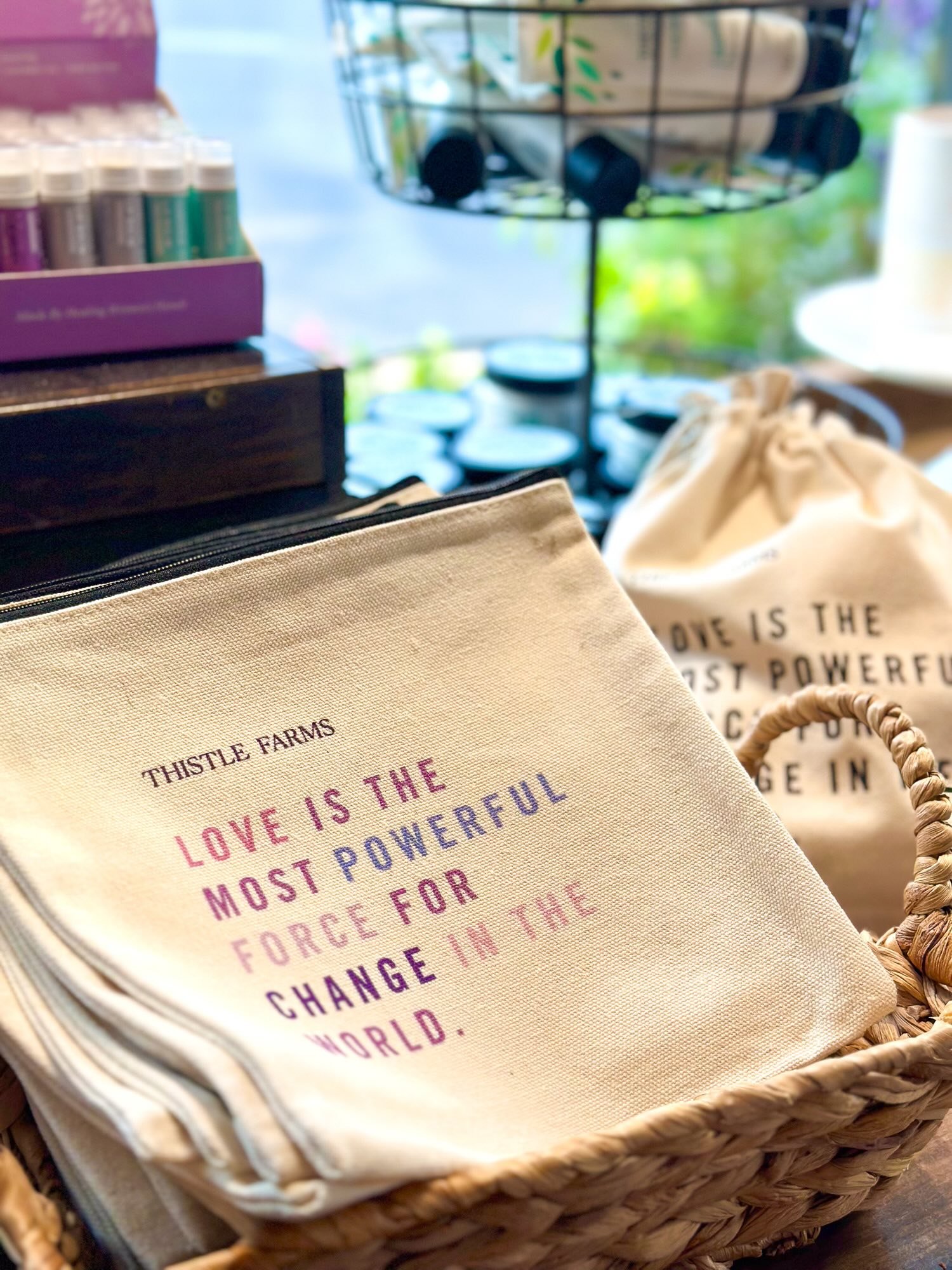
Thistle Farms restored my faith in humanity.
Between national events demonstrating that good people will let bad things happen if it serves them well, and a local situation where I witnessed person after person allowing harm to be done to others, I could feel myself losing faith in people to look after one another.
Researching Thistle Farms restored my hope that it’s possible to live in a society where people protect each other.
The mission of Thistle Farms is centered on the safety of women, but I was reminded as I listened to survivor stories that we cannot create safety for women without first creating safety for children.
Abuse is rampant in our culture. Rampant. Nearly all of the women Thistle Farms supports, who have been trafficked, exploited, forced to prostitute themselves, or ended up incarcerated due to non-violent crimes, were abused between the ages of 7-11. Most were abused by people they knew. Most developed addictions to cope with trauma, and all were vulnerable to exploitation because of those addictions.

To protect women, we must protect children.
It took me weeks to absorb the experience I had at Thistle Farms—and my subsequent research; to take in the first-person accounts of abuse and the traumatic reasons why Thistle Farms was founded. And thank goodness it was.
Thistle Farms is creating a movement for women’s freedom—and women cannot have freedom without safety and economic independence.
The stories I heard (and read) from women associated with Thistle Farms were gruesome. And yet, many of them are healing, thriving, and reaching back to help others. They have created a lifelong sisterhood.
Ninety percent of the women who have gone through the Thistle Farms two-year residential program—and gained work experience through the social enterprises—stay on and work as staff members. This requires sensitive and trauma-informed management, and an internal culture that supports recovery. That’s not easy, and the community continues to hone its ability to sustain this type of environment through intentional communication, restorative rather than punitive practices, and an ongoing feedback loop.
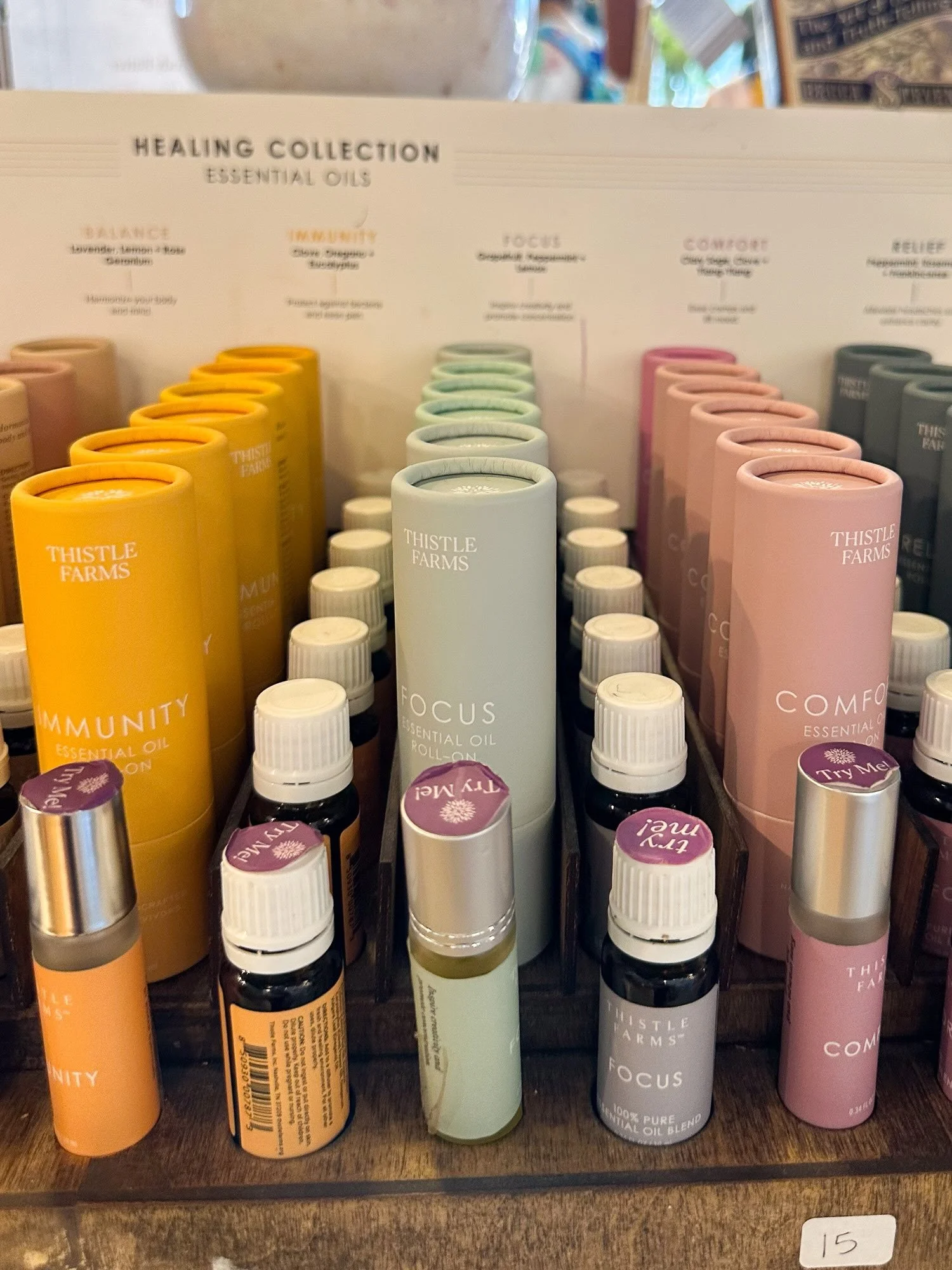
Healing is woven into everything at Thistle Farms, and you can feel it when in their spaces. They execute their mission as a full sensory experience—and it’s so special.
Due to the nature of my work in the nonprofit sector, I have been exposed to many mission-driven organizations. This one was different, however. The mission is not only present in the programs and policies, it’s physically absorbed into the body.
The products sold by Thistle Farms are made and manufactured by survivors. Body products contain essential oils designed to care for bodies that have been bruised and battered. The oils are sourced intentionally from people who are healing, and then they are poured into lotions, balms, and candles by survivors. The oils, and the products infused with them, help women reconnect with their bodies and spirits. Those connections were often lost enduring years of abuse.
Connection is valued at Thistle Farms. Not just connection to self, but connection to others. Those connections have created the community Thistle Farms uses to sustain itself.
Speaking of connection, I was surprised by the cohort experience I enjoyed as part of my on-site learning. I was the only consultant and researcher, but sitting among women from WA, UT, ID, TX, LA, OK, IN, OH, AL, MS, NJ, NY, and NH, who were trying to create more support for women in their states, was an unexpected highlight of my experience.
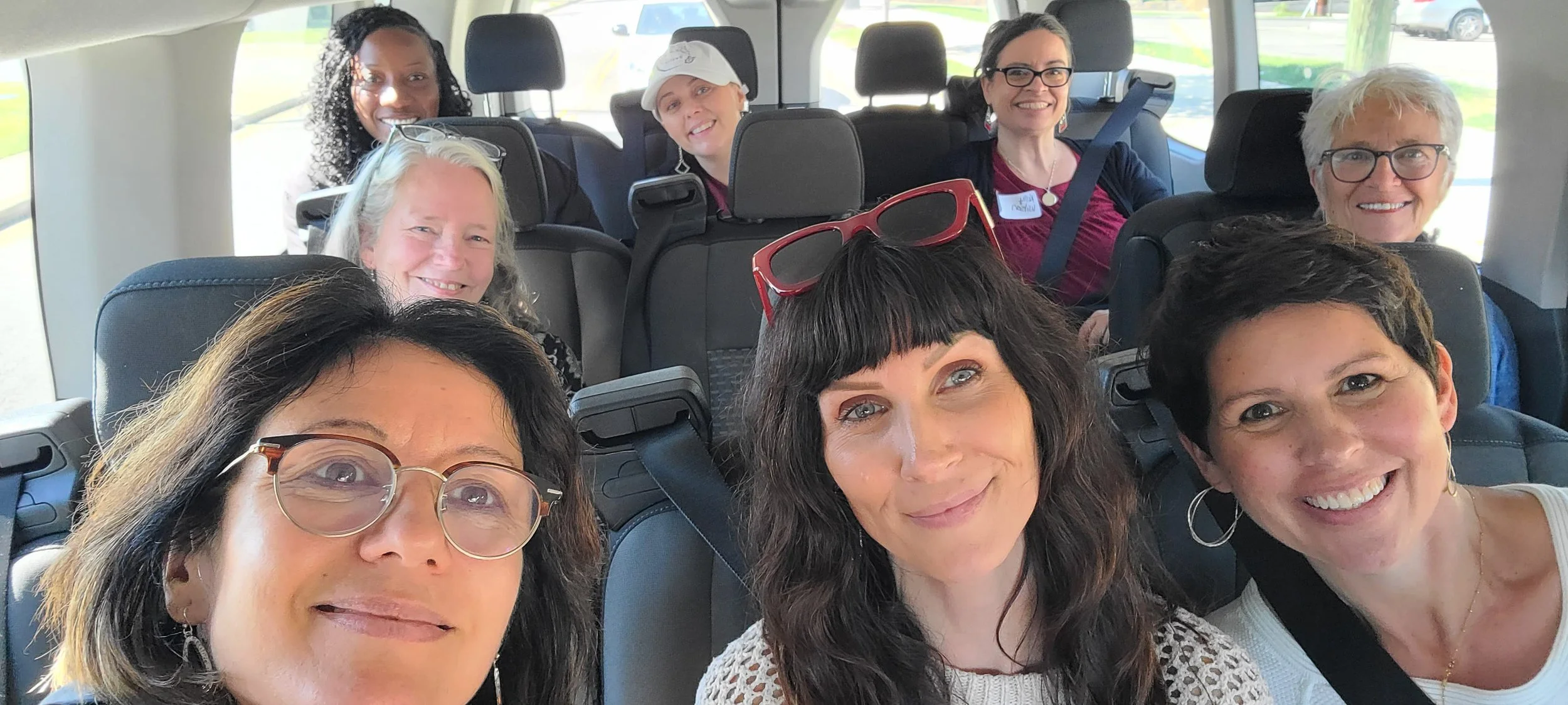
All of them remarked on the programmatic differences between how Thistle Farms runs its programs and the ones they knew. They shared stories of how few resources were available to women in their states, and sadly, many talked about organizations directing funds meant for women to leaders instead—especially in job-training programs. The sense of community WE developed in the days we were together reinforced my feeling of hope for the future.
My favorite moment of my on-site experience was during my last morning in Nashville. I was taking photos in the Thistle Stop Cafe, and I explained my presence to a woman on a ladder who was writing the daily specials on a vertical piece of paper. I explained my project and that I wouldn’t take any photos of her.
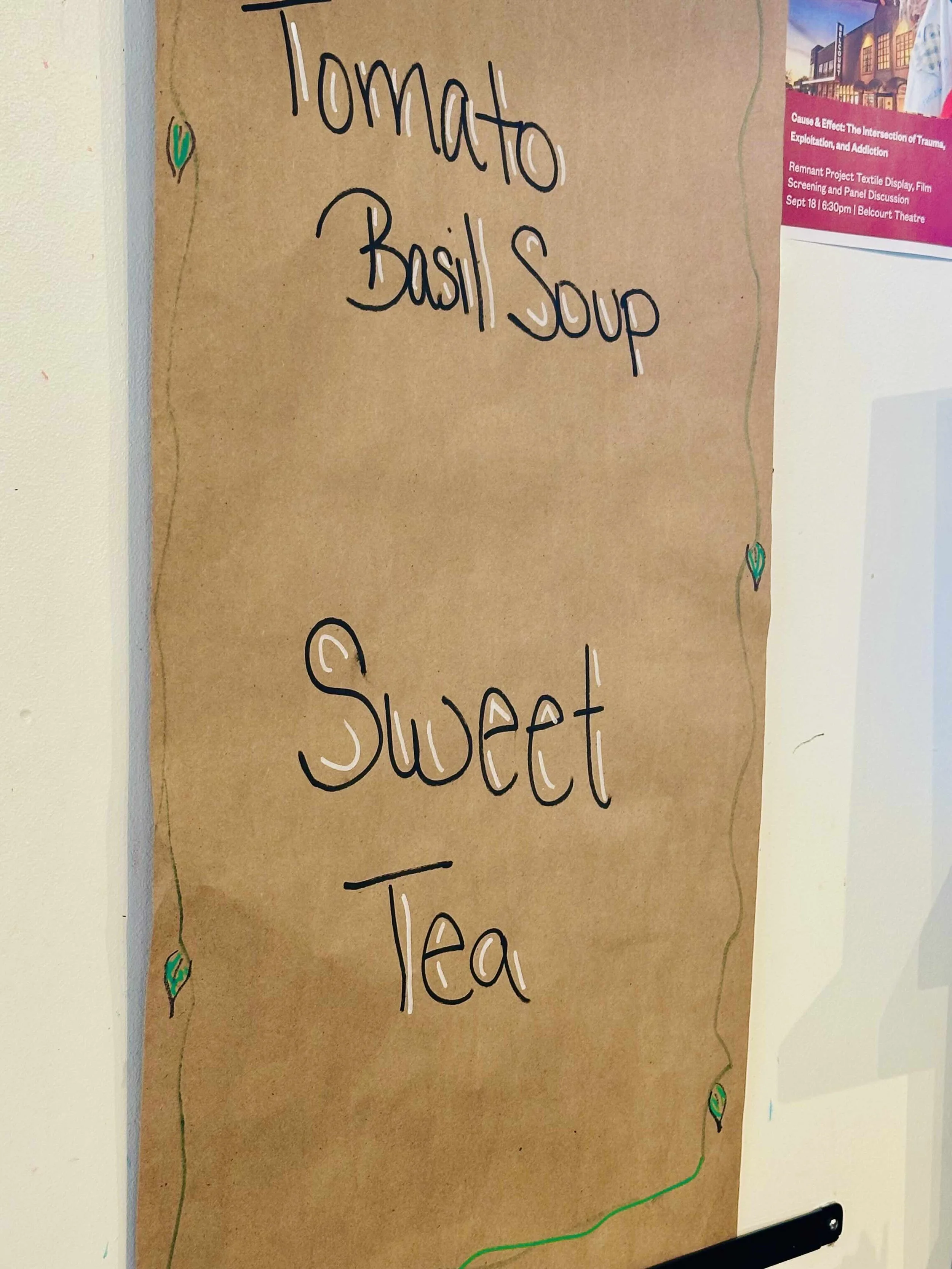
Without prompting, she came down, smiled at me with twinkling eyes and dimples and said, “This program saved my life.” She went on to tell me her story, and how she arrived at one of the residential homes and couldn’t believe when someone handed her a basket of necessities, a key to the house, and showed her to a room with fluffy linens, lavender candles, and peaceful artwork. “They loved me back to life,” she said. She talked to me about her journey and how her life was changing. When she left me, I could feel her relief that her life might forever be different from what it was—and she had joy.
She was one of several women who proactively told me their stories as I took photos during the quiet moments of the week. And as I listened to story after story, I could feel why the motto of Thistle Farms is LOVE HEALS. Every story I heard included a woman saying she felt loved. That she felt like she was being held by a sisterhood. That she felt she was being cared for now to learn how to care for herself later.
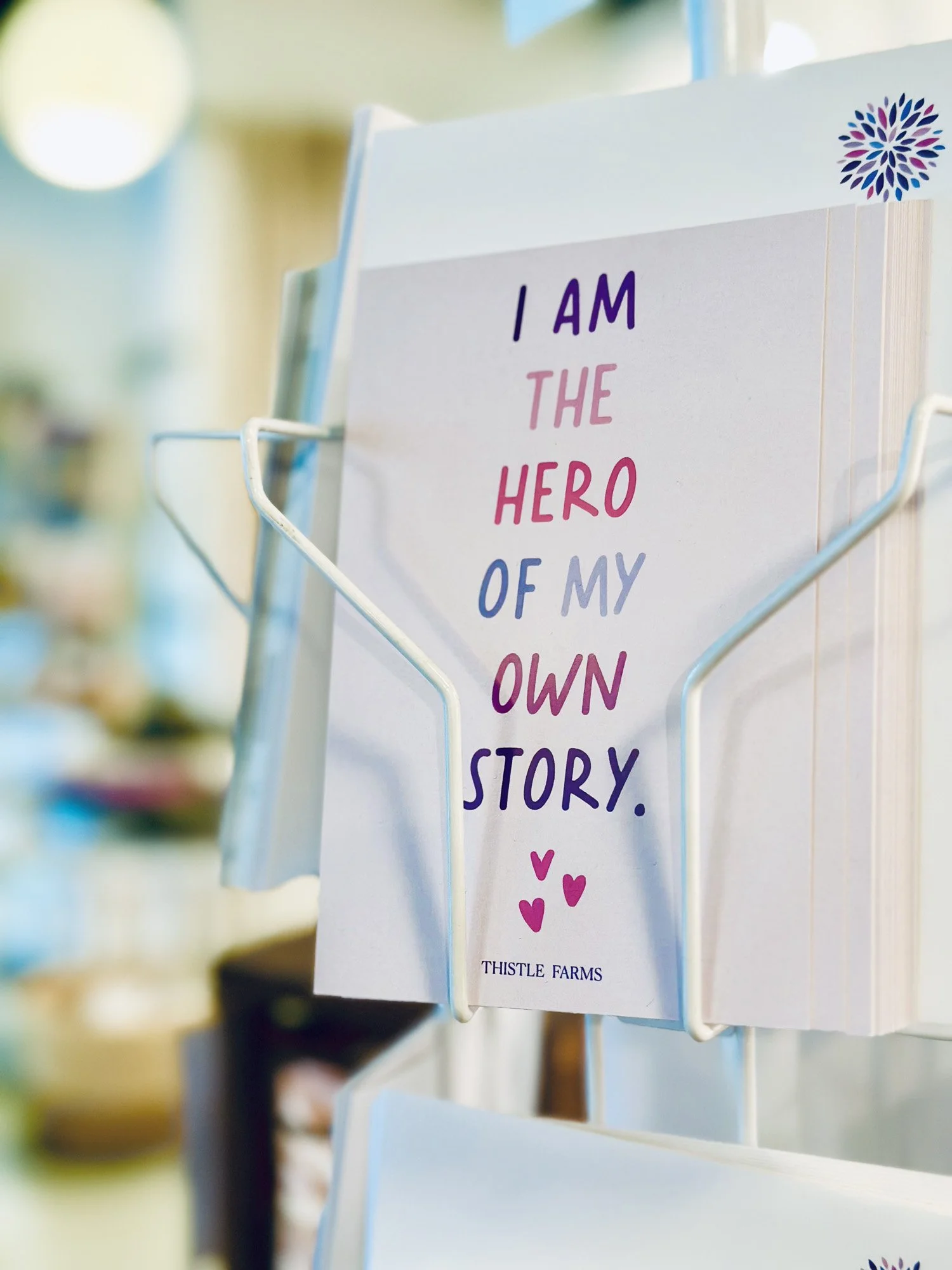
Many of the Thistle Farm products say “I am the hero of my own story.” This is to reinforce that women have agency and power within them. No one is saving them. They are saving themselves. Thistle Farms is simply creating the time, space, resources for them to do so.
There is so much to be learned from the work going on at Thistle Farms. From program creation/management and how to create social enterprises to how to harness community to fundraise and move strategic initiatives forward.
But what I learned beyond all of this is that it’s really true that LOVE HEALS. Let’s do more of that.