

Trigger warning: The following contains content relative to sexual trauma and abuse.
Why Thistle Farms?
Thistle Farms in Nashville, TN was chosen as the launch of the Women’s Work project, because this field-research effort is designed to explore how women are creating economic opportunities, building collectives, managing social enterprises, and leading initiatives that empower women to thrive. Thistle Farms embodies all of these.
Founded in 1997, it also offers a powerful example of how a single idea led to a collective effort that has evolved over three decades.
FURTHERMORE:
Thistle Farms operates the largest national network in the United States for long-term, free residential programs for survivors of trafficking, prostitution, and addiction, providing housing and support for women across the U.S.;
It has a unique approach to residential care offered at no cost to the women it serves and is a model for over 90 sister organizations;
It has three social enterprises, designed to be justice enterprises;
It uses a model of community-based organization and shared accountability;
It created a Global Shared Trade network that goes beyond the model of Fair Trade;
It has longitudinal data and has been researched and vetted by industry peers and agencies;
It drives effective advocacy and policy change;
It has a Founder who uses her unique blend of skills to serve as a powerful fundraiser;
It doesn’t rely on Federal funding;
It encourages an economy built on care and collaboration.
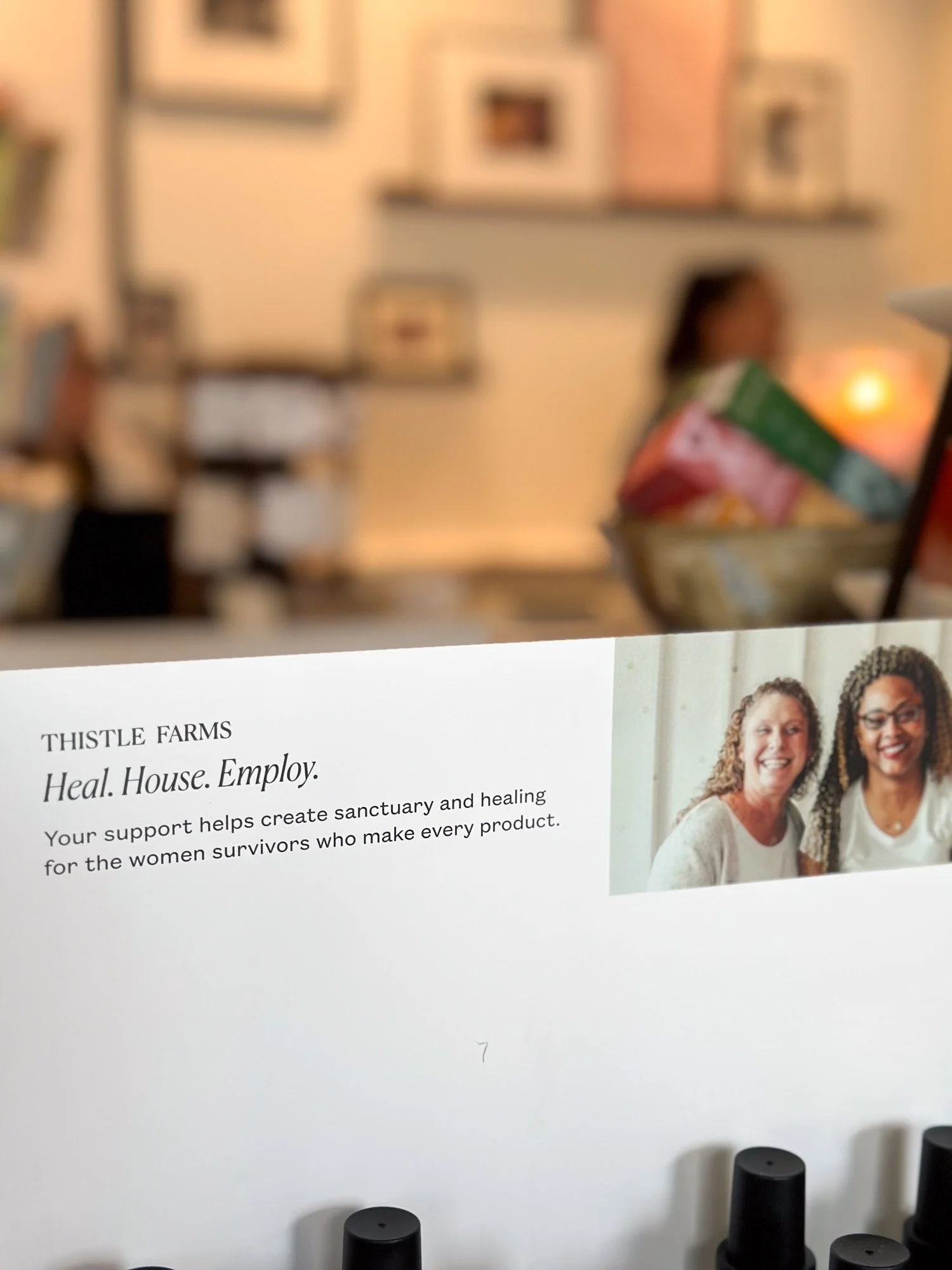
MISSION: Thistle Farms is a nonprofit social enterprise dedicated to helping women survivors recover and heal from prostitution, trafficking, and addiction. We do this by providing a safe place to live, a meaningful job, and a lifelong sisterhood of support.
National Trafficking Hotline
CALL 888.373.7888 TEXT 233733
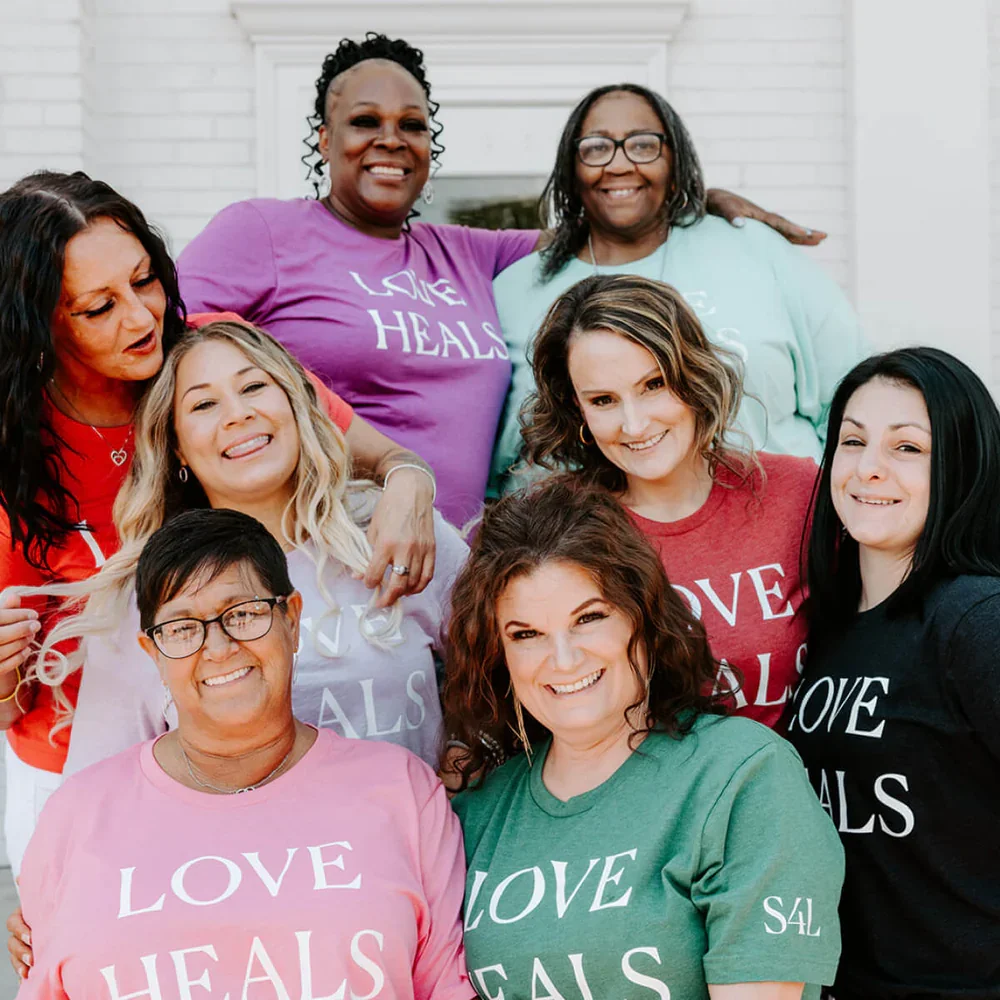
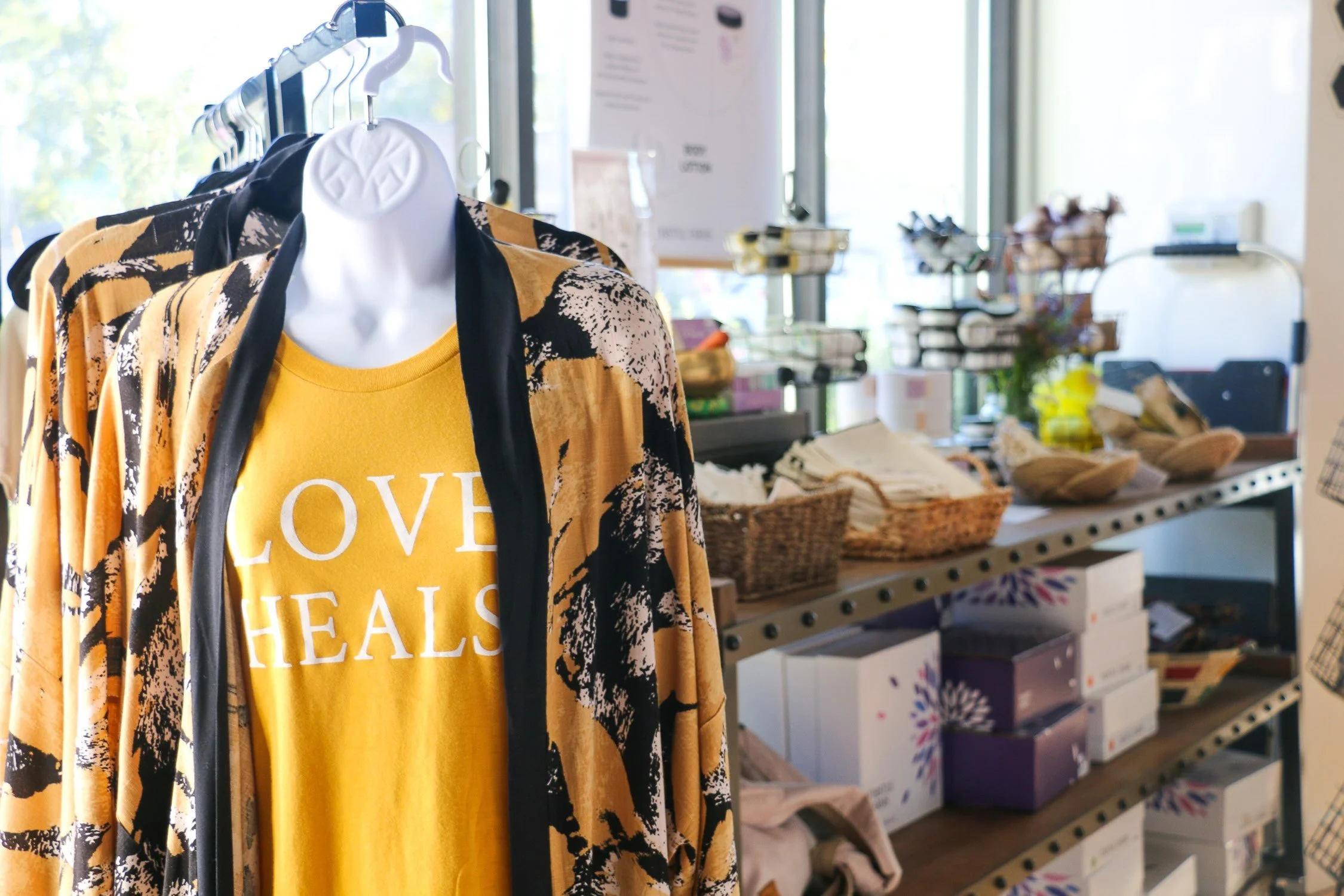
LOVE HEALS
•
When Women Heal, Communities Heal
•
LOVE HEALS • When Women Heal, Communities Heal •

“As women began arriving [at our residential program] to find healing in a safe place and with each other, I realized the need for something more. All the women came from the streets, prison, or both. They had huge gaps in their education, serious addictions, long arrest records, and little work history. All of that meant that most of the women couldn’t land a job. Though they were getting clean and healing, the women were financially unstable. Healing isn’t just physical, emotional, and spiritual, but also economic.” ~ Becca Stevens, Founder of Thistle Farms, from her 2013 book Snake Oil.
Three Distinct Social Enterprises
Thistle Farms has designed its social enterprises to be justice enterprises and has begun referring to them as such. For external clarity, StoryB has left the term social enterprise in this content, so phrasing remains consistent with the language used in the official Thistle Farms mission.
-
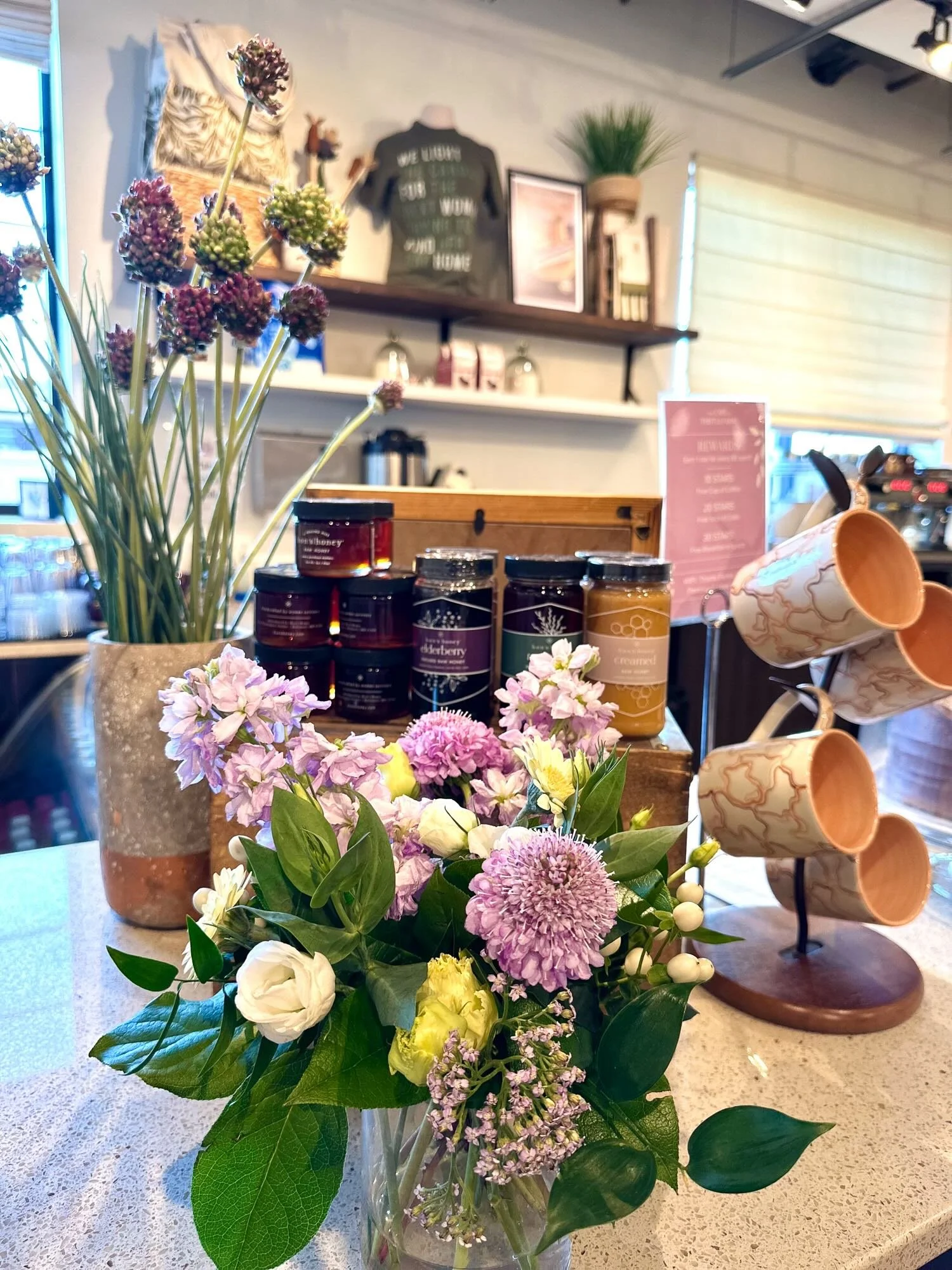
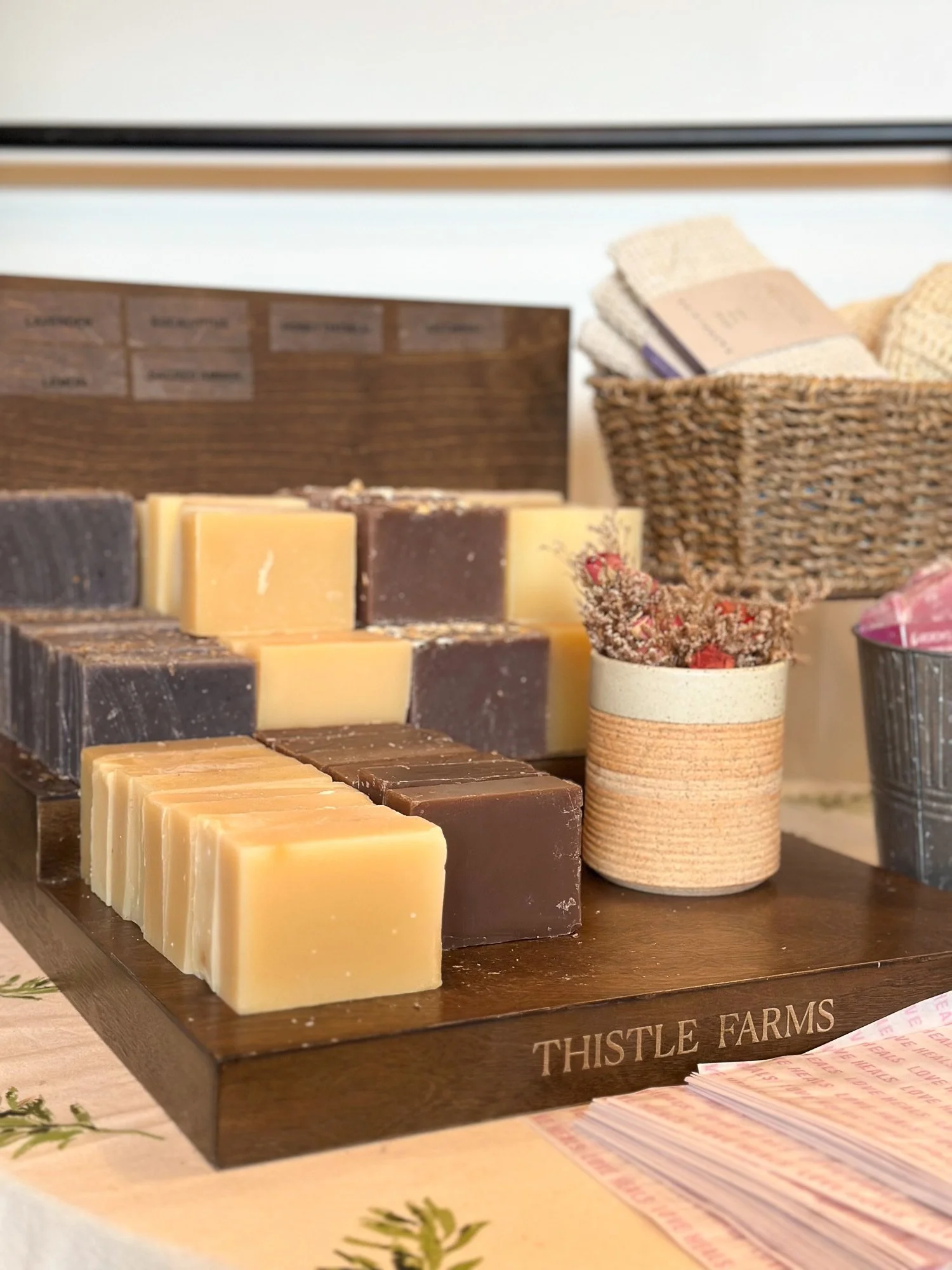
Inspired by her mother’s wisdom to put money into programs not buildings, Becca Stevens, Founder of Thistle Farms and an Episcopal Minister, started what is now the Body & Home division by making and selling aromatic, healing balms in any space available.
In her words, they are more than products,
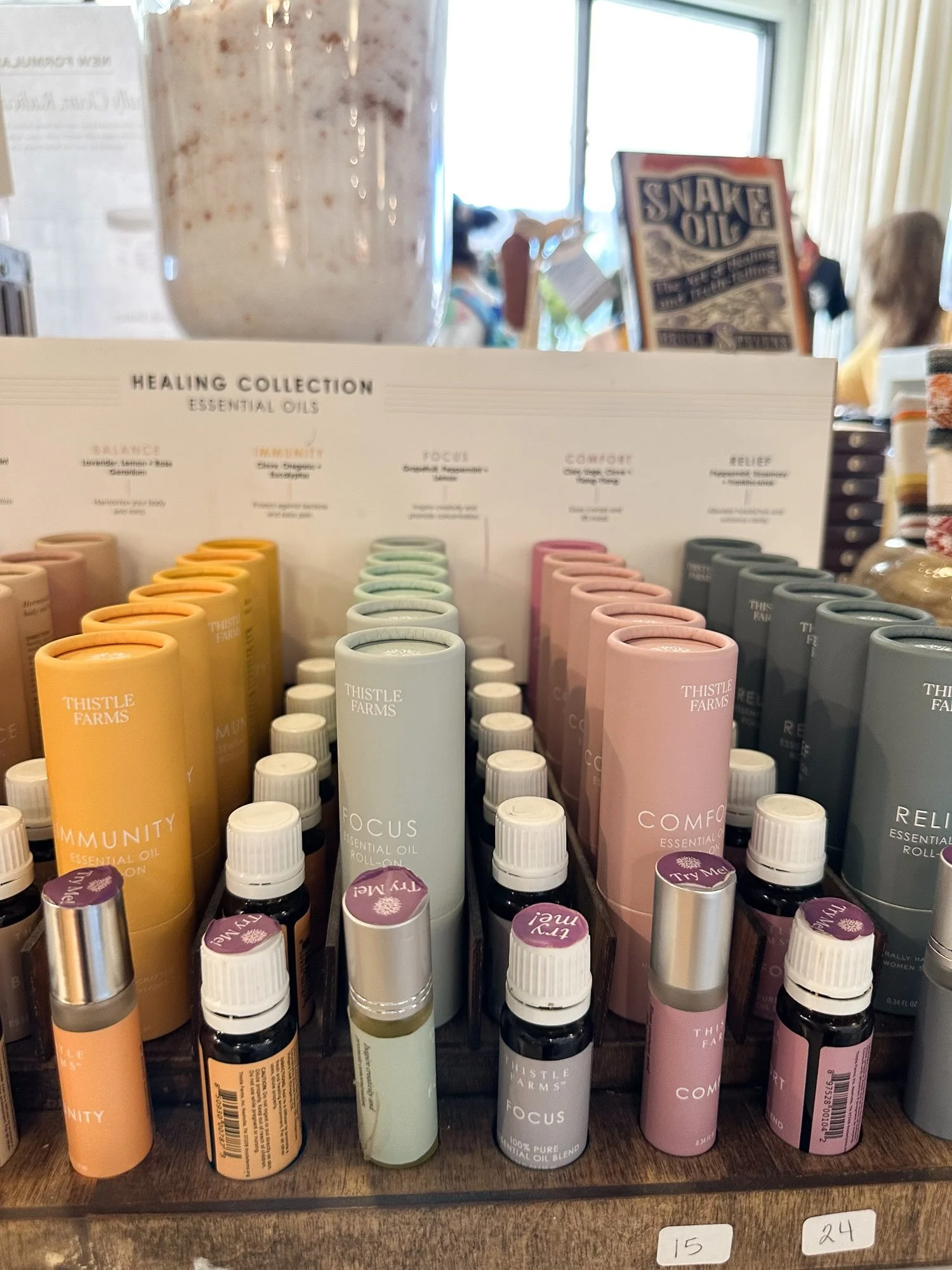
“The oils have potent healing properties that, combined with love and prayers, are a source of healing. Their antiviral, antibacterial, anti-fungal, and anti-infectious abilities make them valuable tools in the healing process.”
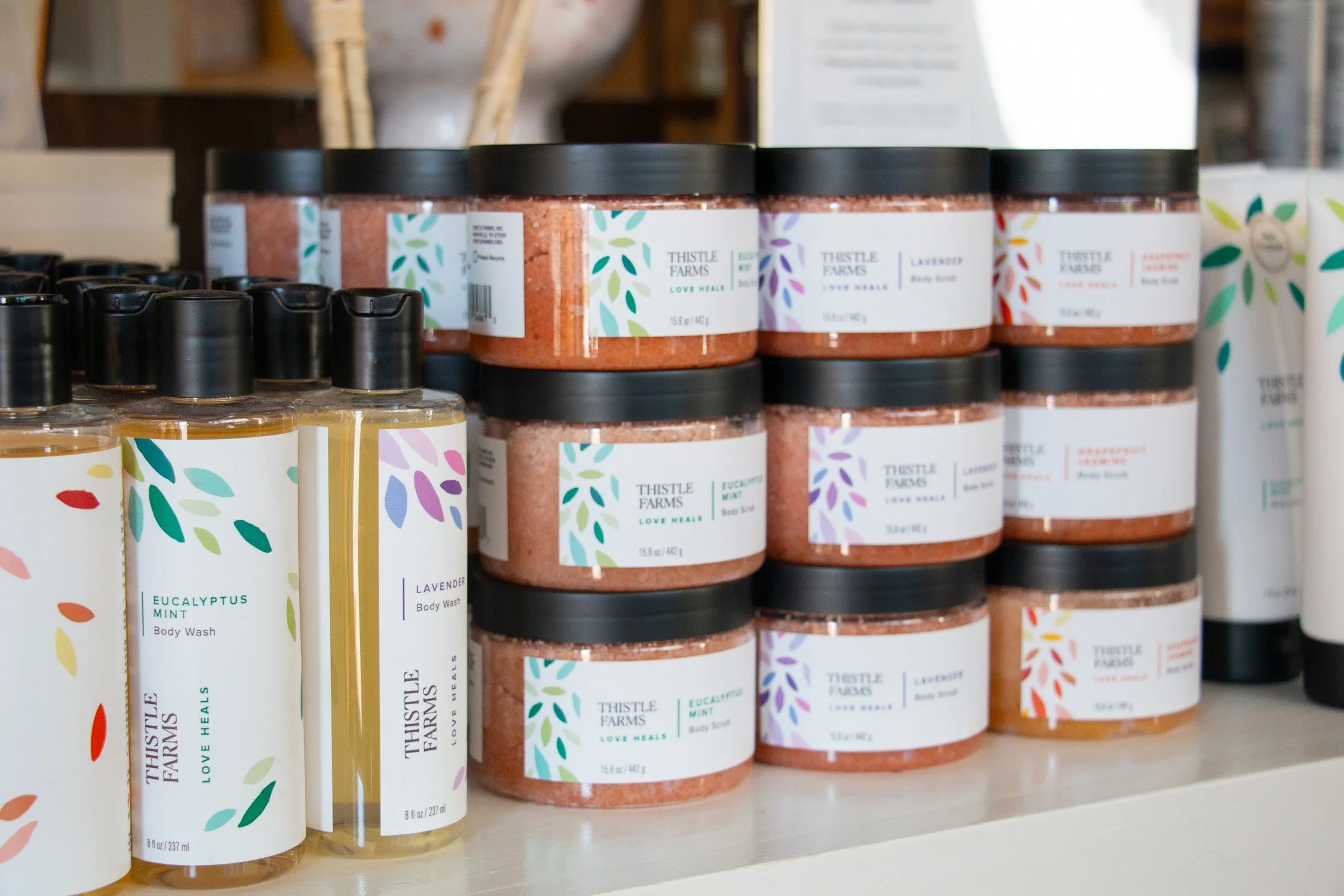
What began as the creation of small products has developed into an international product company housed in a warehouse not far from the Cafe at Thistle Farms.
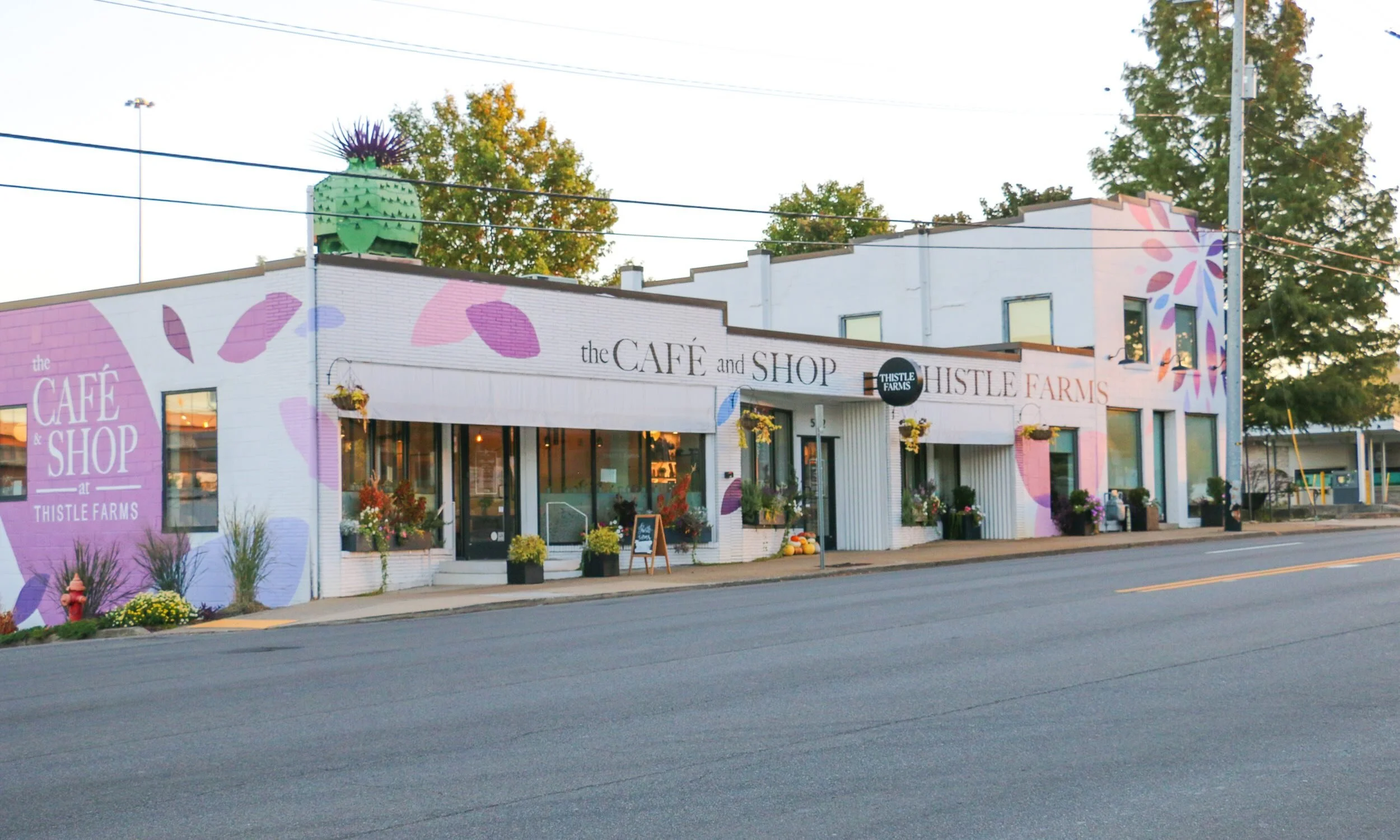
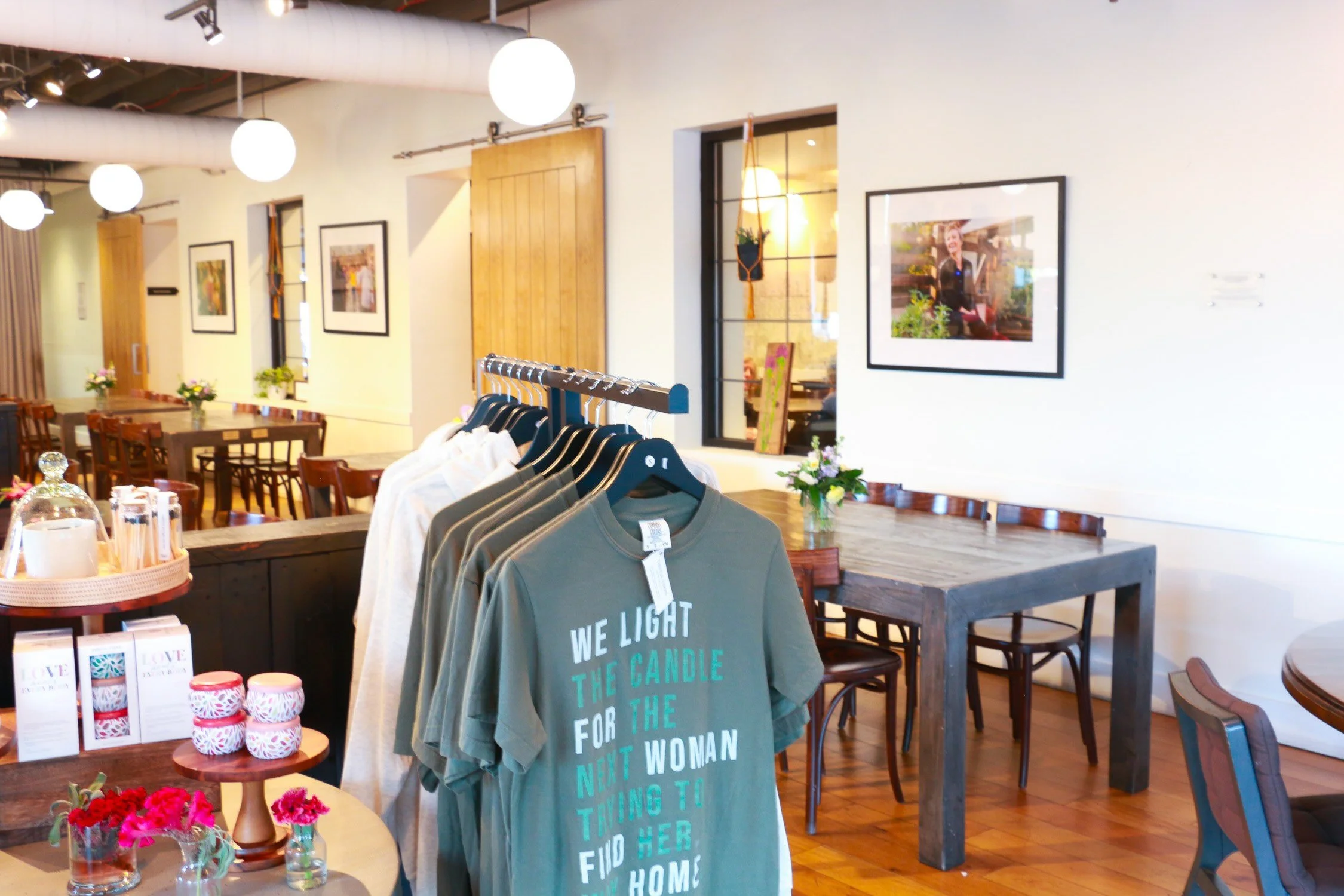
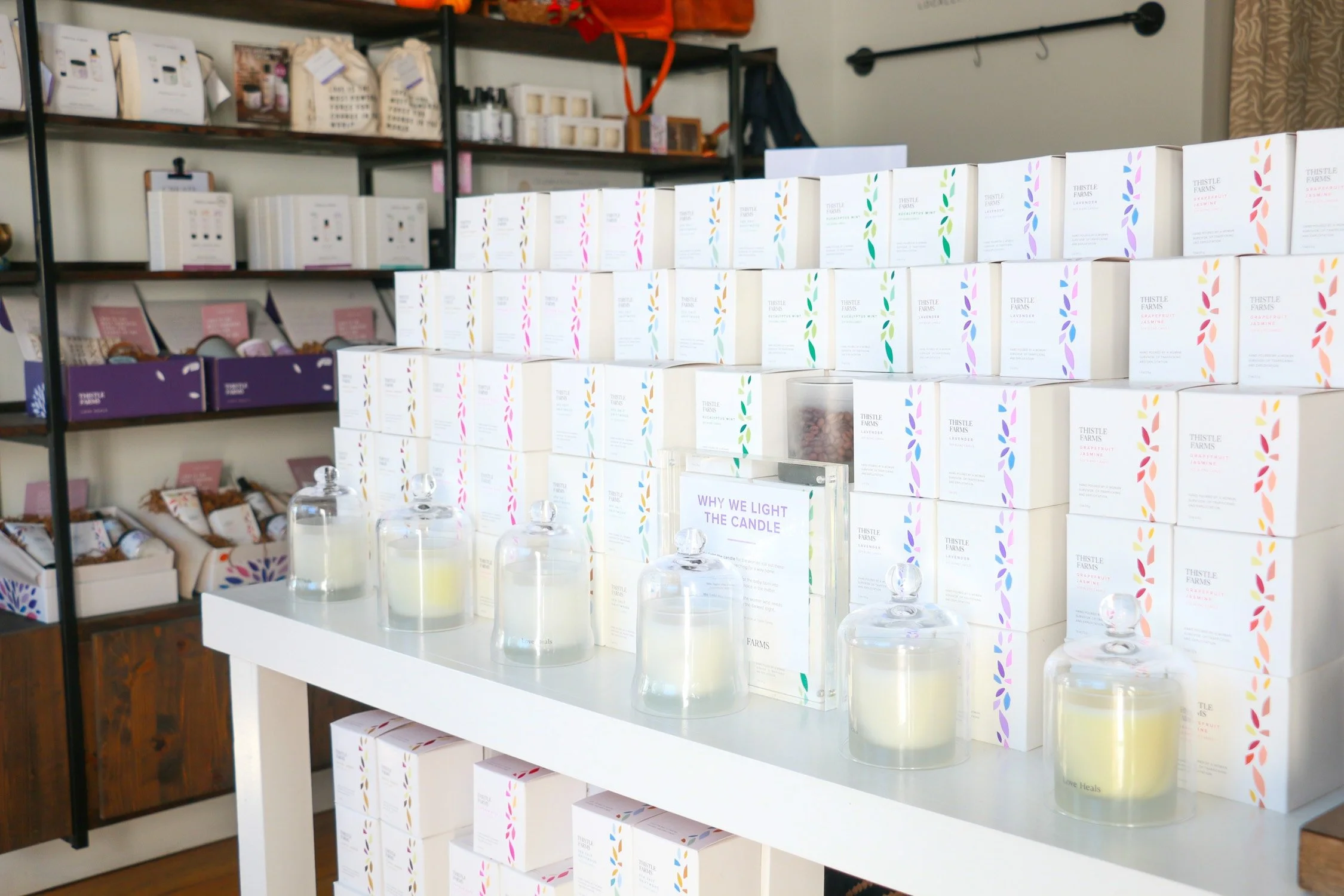
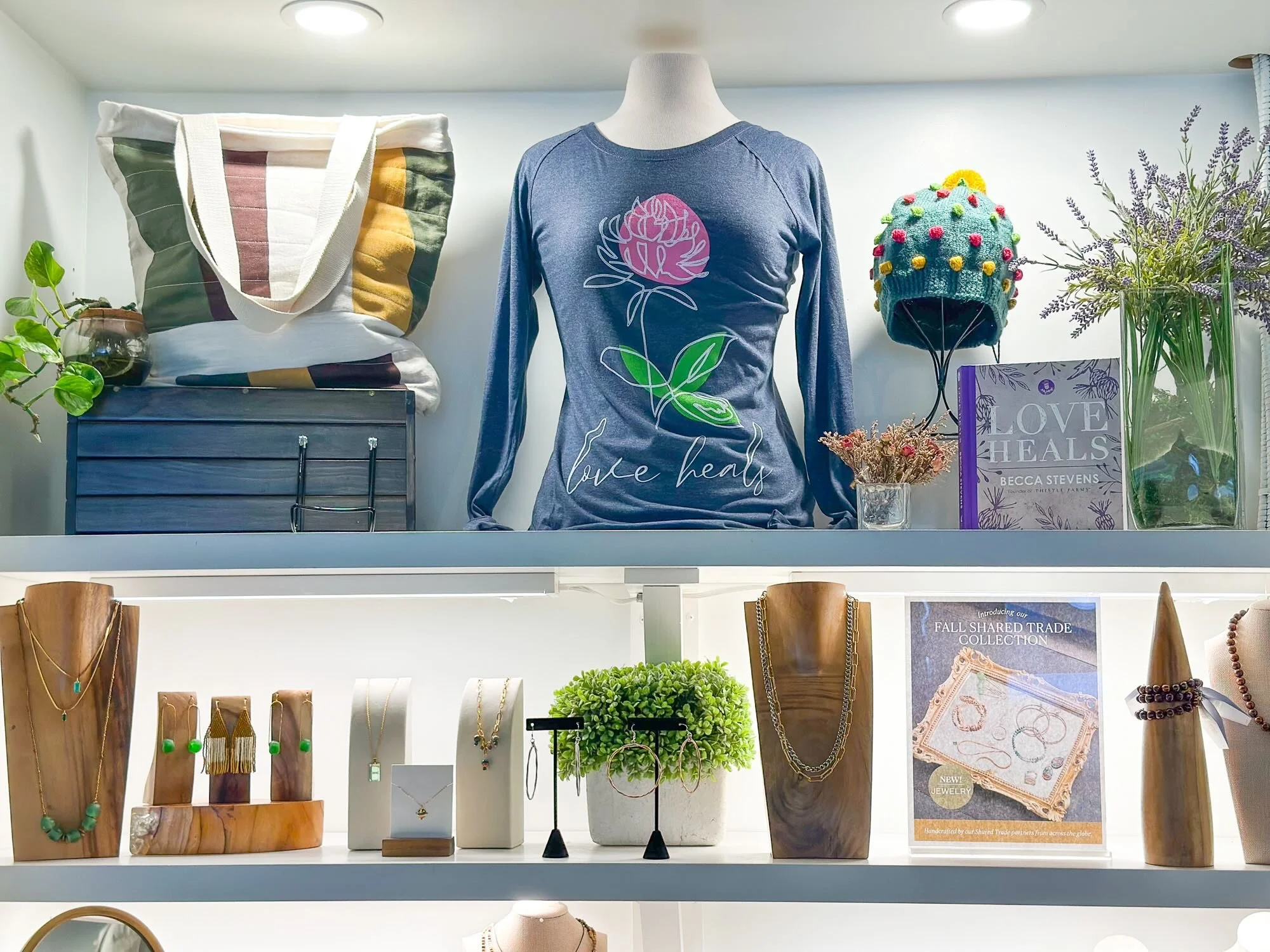
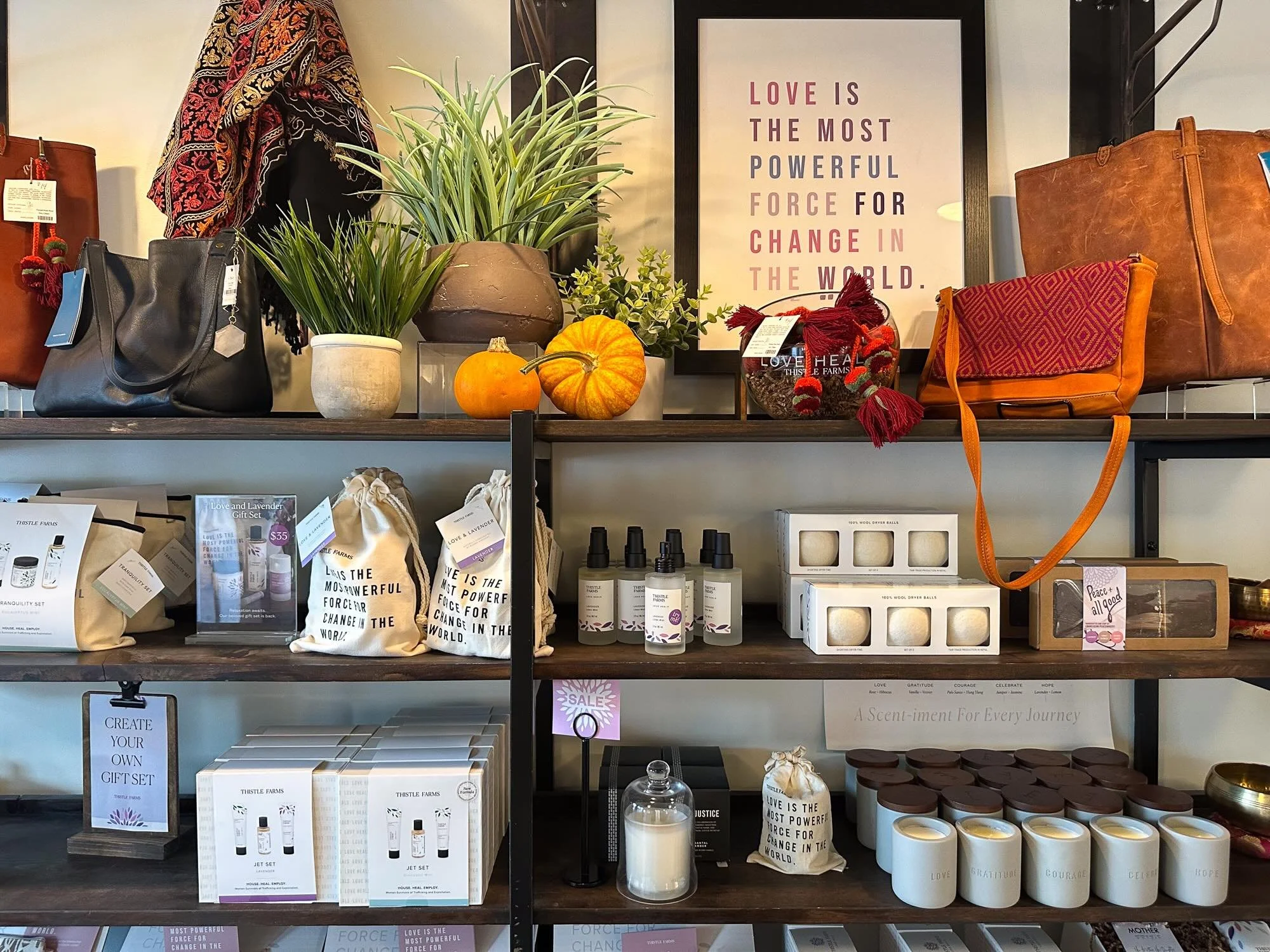
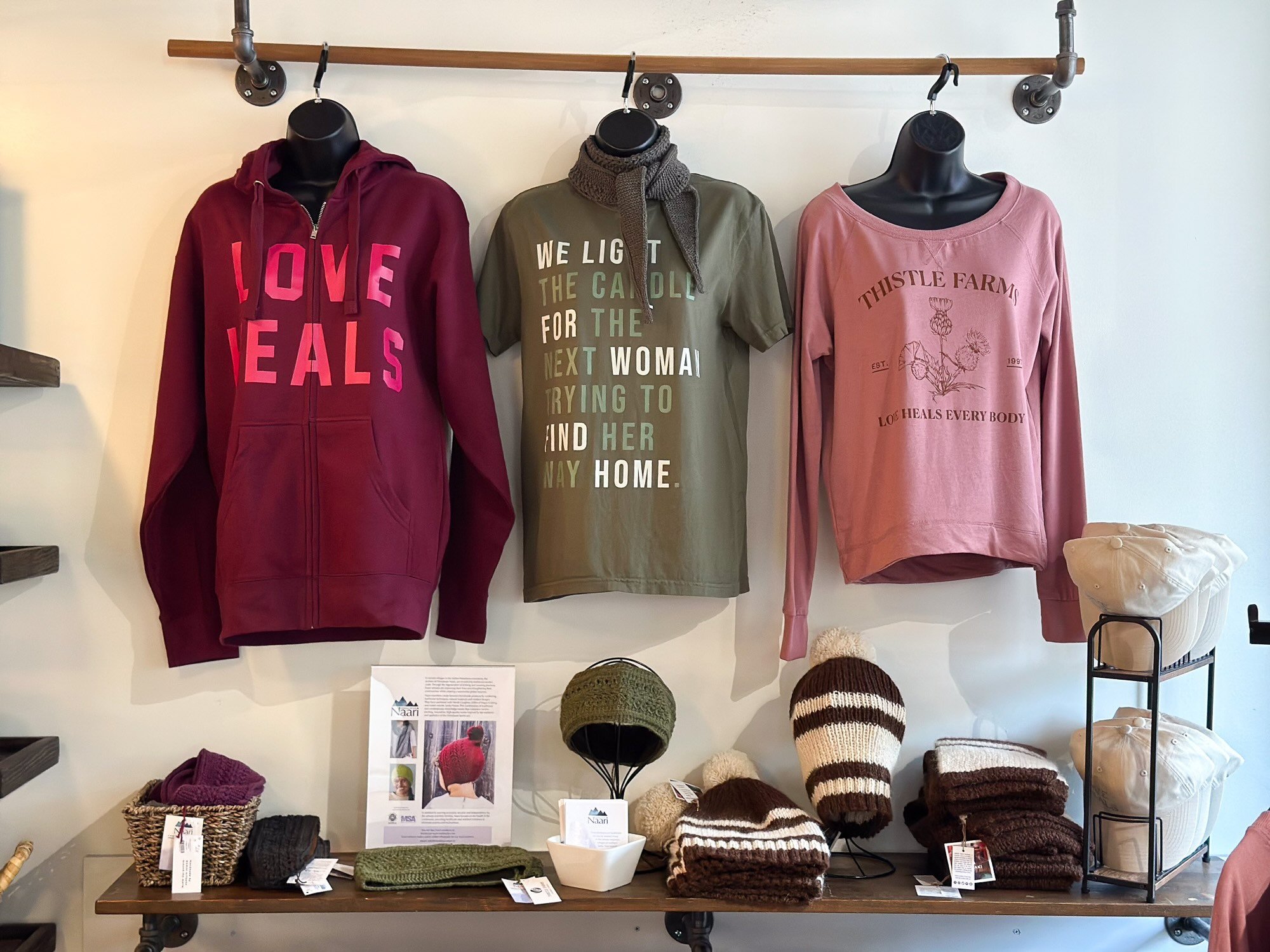
By extension, Body & Home also has a physical space to sell its products. The Shop, which also manages online orders, is adjacent to the Cafe at Thistle Farms.
Body & Home serves as both a learning and healing environment for women and a mission-supporting social enterprise.
“Thistle Farms products have become a means of selling hope and a cause. The products provide healing on many levels—both for those who create them and those who use them,” says Becca.
To learn more about the history of the Thistle Farms products, and the development of the Body & Home division, read Snake Oil .
The products made and sold by Thistle Farms create a platform for a larger conversation about women’s freedom.
-
By 2010, Thistle Farms was developing into a powerful voice for women’s freedom, had a growing Body & Home division, and needed a space to produce millions of dollars worth of products each year.
They purchased real estate, which included four storefronts, a manufacturing facility, and offices.
The Cafe at Thistle Farms was launched in that space in 2013 after a two-year effort that included fundraising $250,000 and engaging community volunteers to help design, build, and decorate the space.
The Cafe was the second social enterprise grounded in healing—with tea as a central focus.
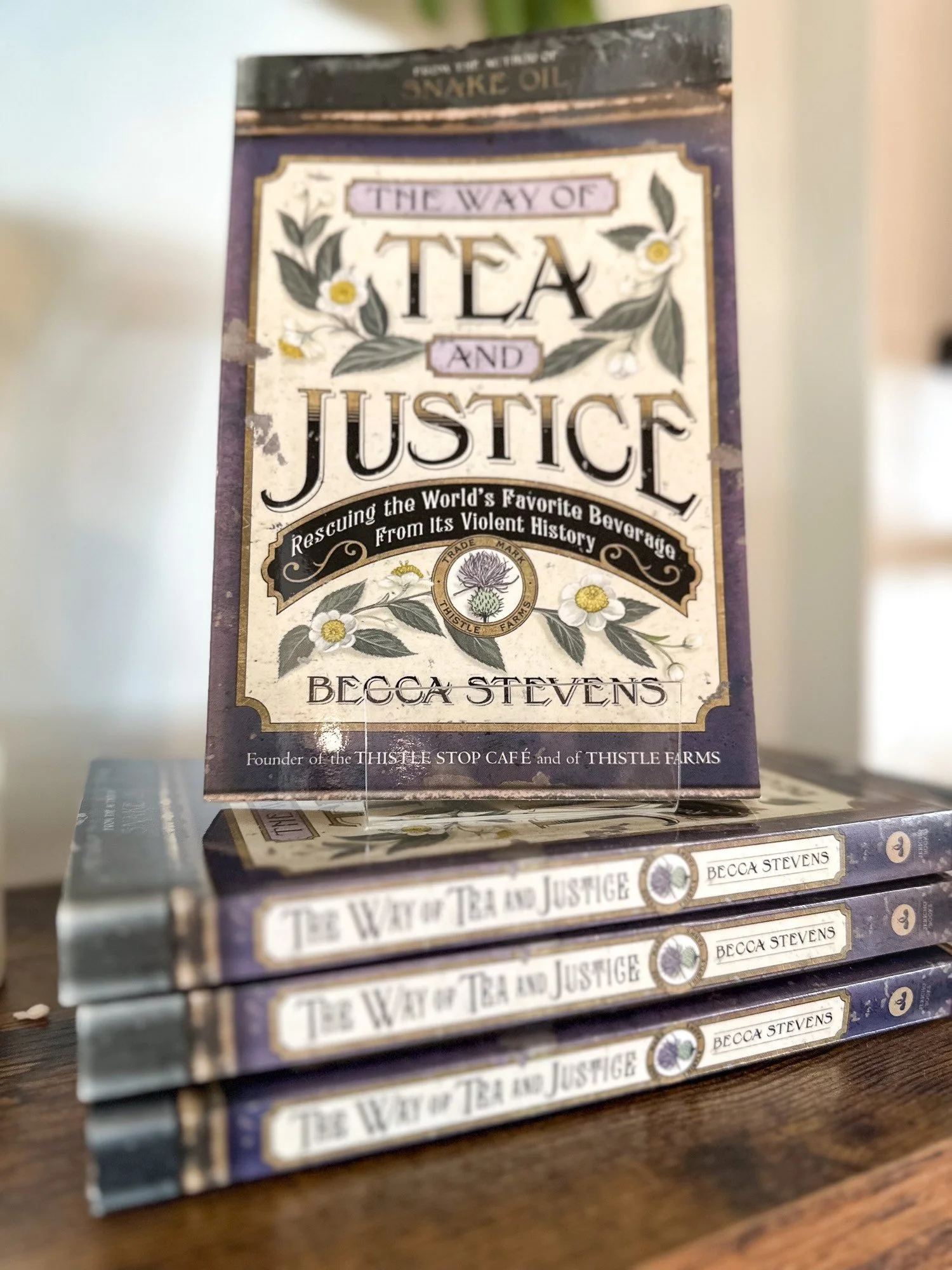
The learning journey Becca and others took to understand the brutal history of tea in our world and reclaim it as a source of healing is documented in Becca’s 2014 book The Way of Tea and Justice: Rescuing the World’s Favorite Beverage from Its Violent History.
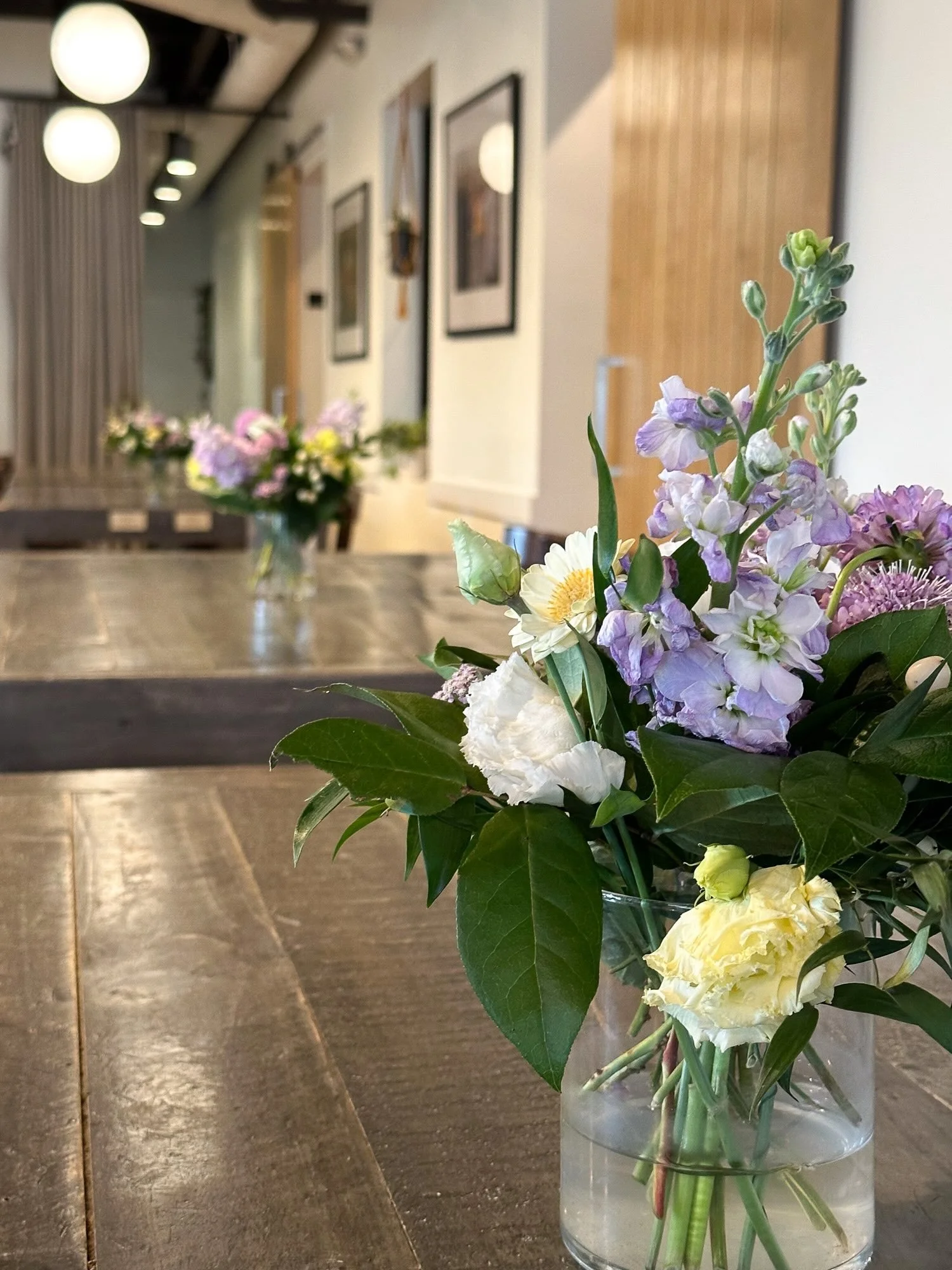
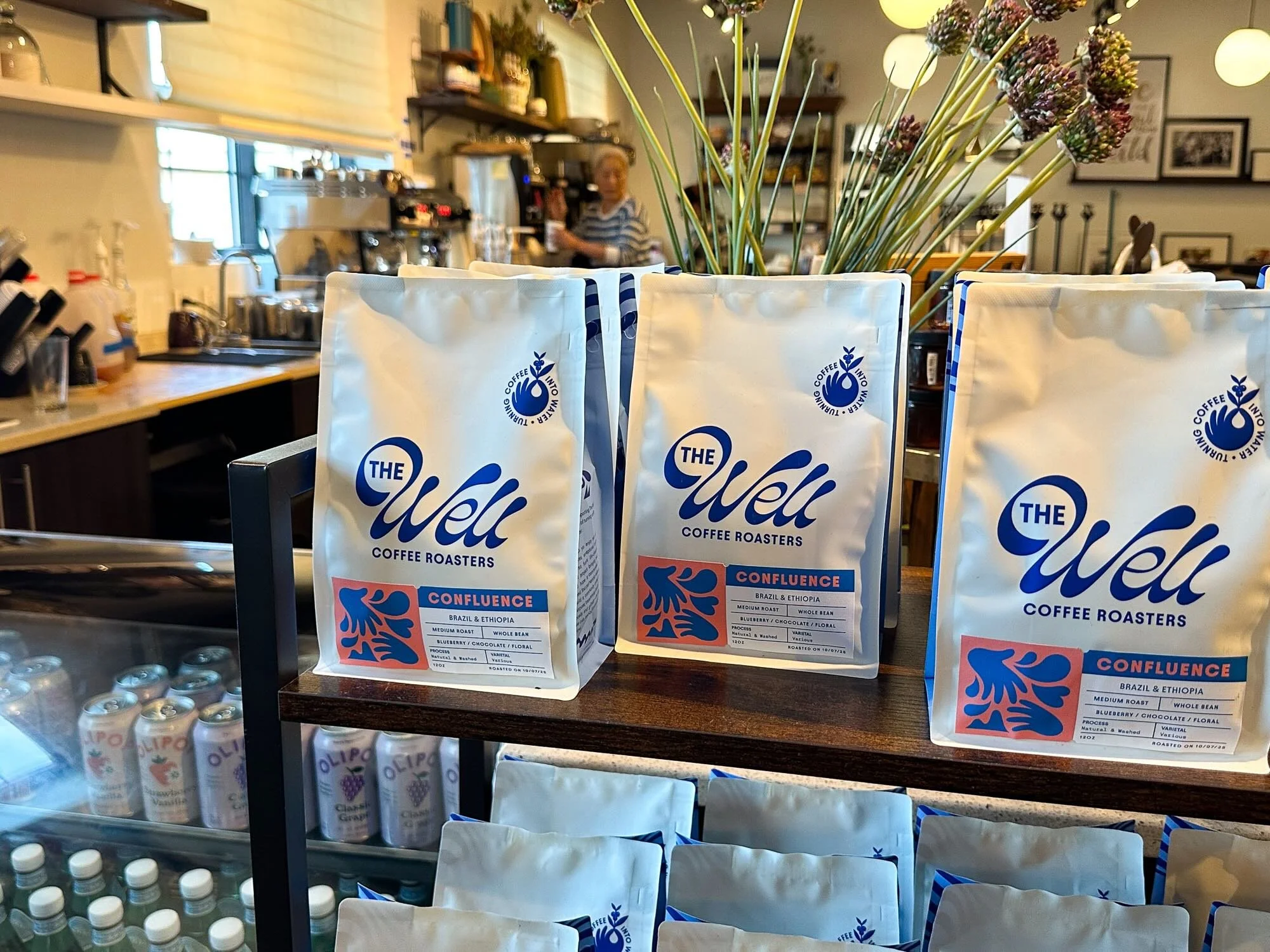
The Cafe at Thistle Farms was opened in 2013, had to be re-built after the ceiling collapsed in a storm, and is now a lavish community environment in Nashville, TN.
It is a space for the community to enjoy and also learn about the mission. Like Body & Home, it also serves as a learning environment grounded in management practices that support recovery.
-
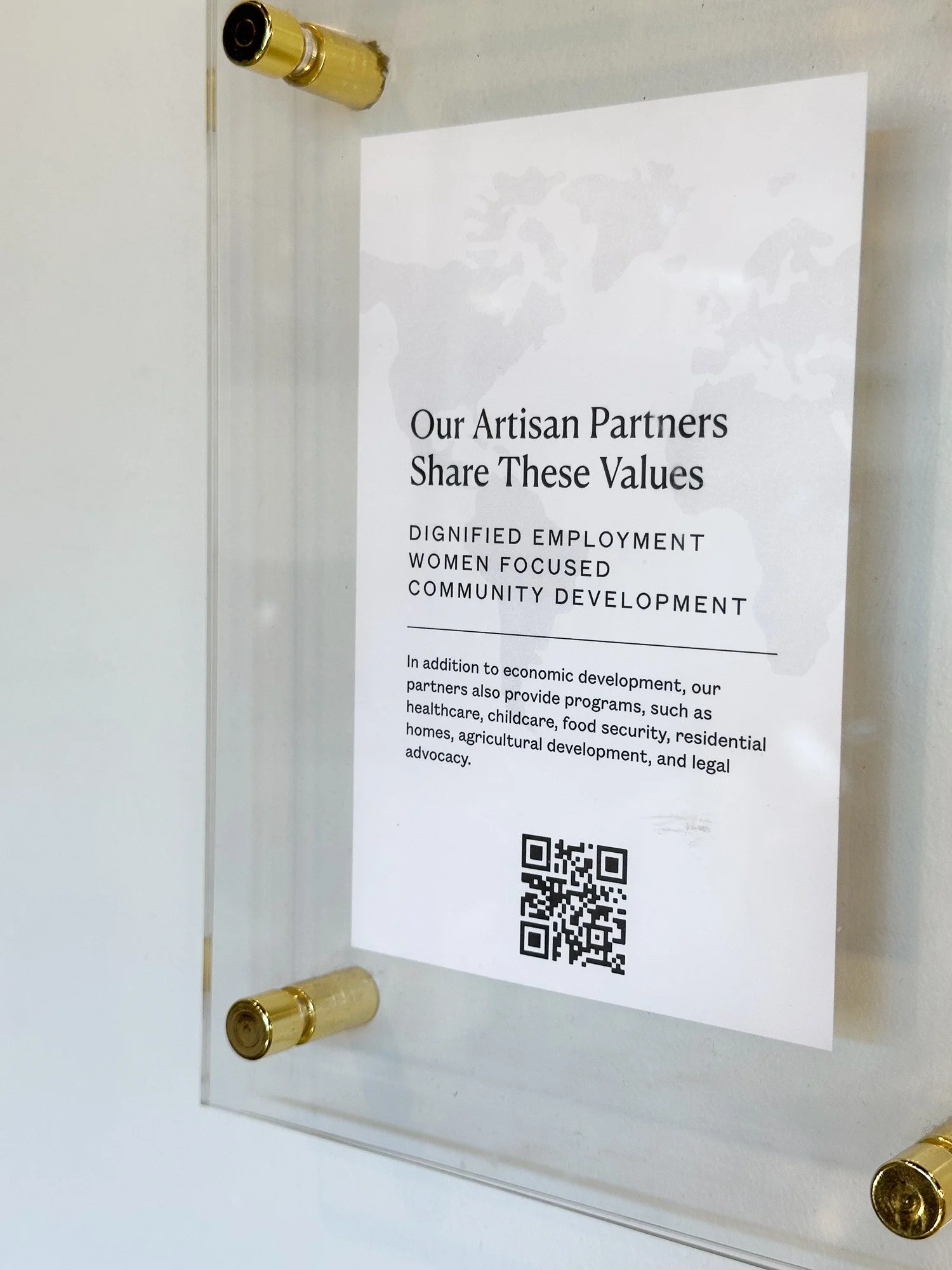
Global Shared Trade goes beyond Fair Trade. It is a cooperative model that connects with women producers to distribute and sell handmade products and increases the women’s share of profit margin.
It is designed to create opportunity by expanding markets and to build community to fight poverty.
Global/Shared Trade was born from a desire to help women in Rwanda build back their lives after the Genocide.
The first partnership with these women was called Ikerizi and continues to this day.
Their second was with a sewing cooperative in Kenya supporting women affected by the HIV/AIDS epidemic.
Their third was with a group in Ghana working with homeless, pregnant teenagers recycling plastic bags used for drinking water into aprons, bags, and wallets.
As of 2025, Thistle Farms is supporting 39 partnership programs in over 20 countries and manages a global network filled with individuals who support one another with education, advocacy, and sisterhood.
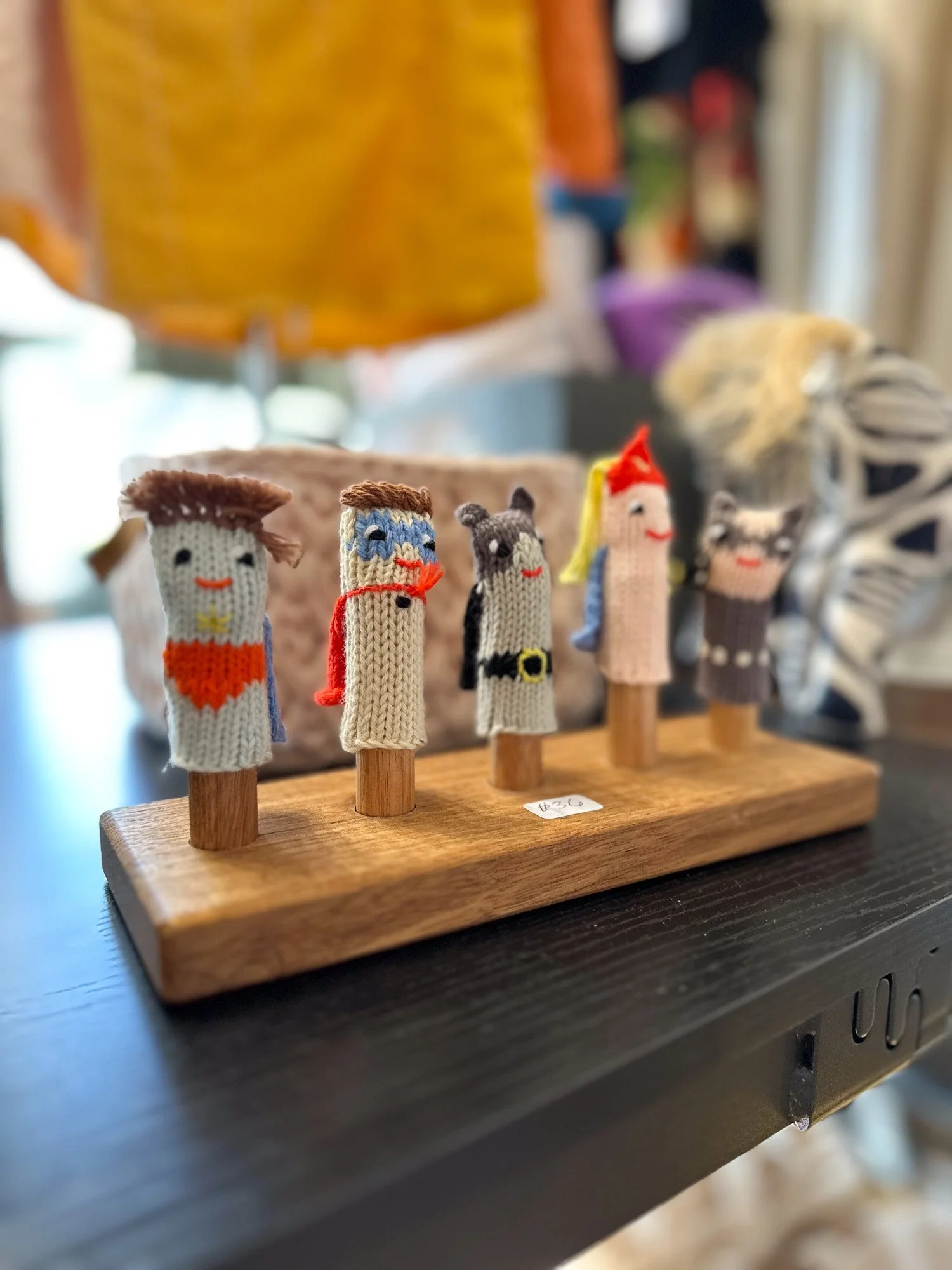
The products from Global Shared Trade are sold in the Shop and online.

“Most of the women we serve first experienced sexual abuse between ages 7-11 and began using alcohol or drugs by age 13. [They] first hit the streets between the ages of 14 and 16. Traumatic childhood experiences give way to homelessness, addiction, further abuse, and incarceration, often compounded by poverty. ”
Residential Program & Healing
-
The care model used by Thistle Farms (TF) is unique in the US—and working. Five years after program completion, 75% of women who graduate are living healthy, independent lives.
Healing requires time and space, so the Thistle Farms program is two years, broken into four distinct stages.
Women are never charged a fee, and it is for women only. Women with children are supported in other ways. Thistle Farms offers an adult-only atmosphere, so women can focus fully on their recovery.
Authority is managed carefully in the homes. Most women coming into the program have been abused and exploited by people in authority. For this reason, no staff live in the homes.
Women’s feeling of safety, and their ability to practice the skills needed to live independently, are supported in structured ways.
Staff and women who have been in the program longer guide their newer “sisters” in how to manage communal living with shared accountability.
Women have full control over their choices, but boundaries exist to support recovery.
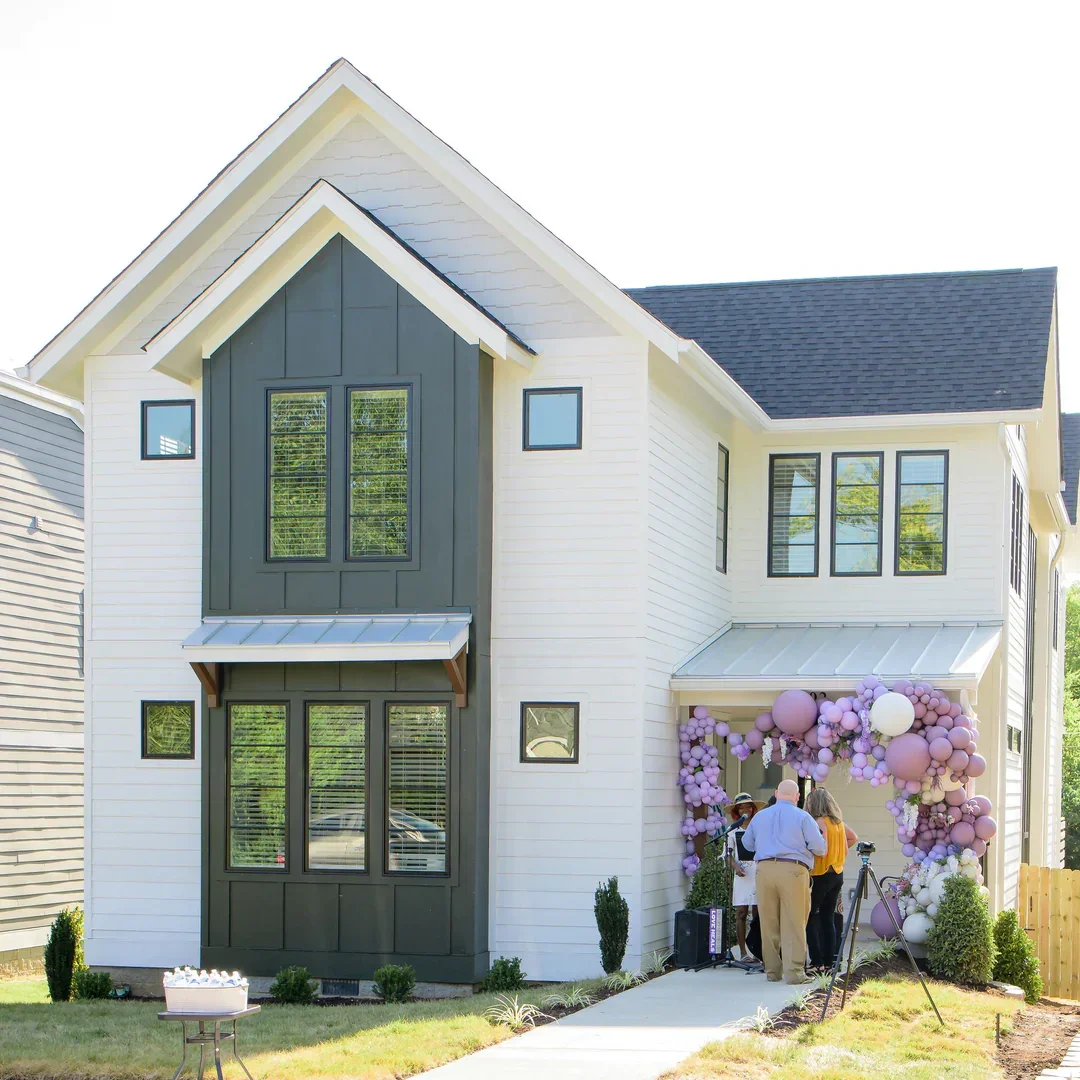
Thistle Farms operates multiple homes that each offer a small group of women a safe and inviting place to live.
Spaces are designed to be calm, comfortable, and beautiful with fluffy linens and towels, healing body products from Thistle Farms, and an overall feel of serenity. There is nothing sterile about their spaces.
Thistle Farms also operates a safe house for temporary crisis support, but that is outside the two-year program.
When women complete the two-year program, there is a graduation and they move out of the homes.
However, care continues with opportunities for employment with Thistle Farms and a continued opt-in community of support.
The program is theologically informed, but not faith based.
If women choose to incorporate faith into their lives, they are free to worship or attend faith-based events and services wherever they choose to, and they can utilize Thistle Farms transportation to do so.
-
Thistle Farms provides healthcare, therapeutic services, access to transportation, an increasing stipend, and case management with professionals who support no more than 7 women at a time.
One mandatory action is women need to put a particular percentage of their stipend into an Individual Development Account, and they receive matched savings when $1200 has been accrued. This helps women learn financial management, and the women are given the full amount back at the end of the program, with a generous matching fee. Many women have used those funds to buy cars or pay the security deposit of a rental unit when they're positioned to move into their own place.
After many months of time and space to focus on their immediate health and stabilization needs, women begin working limited hours as part of a structured job-training program.

Job Training & Placement
-
Part of securing women’s safety is securing their ability to be economically independent.
Women who have been exploited, trafficked, and incarcerated have not had ample experience working.
As women healing from severe trauma, they also need to build emotional regulation skills and practice working effectively on teams and under management.
Thistle Farms begins exposure to job training in stages.
The job training program is within the Thistle Farms social enterprises, because the job needs to work around the healing program. Outside employment during the program would force women to work their healing around their job and would add stress during their recovery process.
Job training is designed in tiers. Work and skill training evolve both in need and intensity.
At the end of the two-year program, women graduate and are offered employment at Thistle Farms.
Ninety percent of women choose to work at Thistle Farms. Care continues, and benefits are designed to support recovery. For example, Thistle Farms offers generous Paid Time Off—even for part-time staff.
Weekly events and rituals help maintain a community of support for all graduates and staff.
Women who choose to pursue education or employment elsewhere are connected with community partners to help launch them on their chosen next steps.
-
Thistle Farms operates three social enterprises:
Body & Home, which includes a manufacturing facility, where Thistle Farms products are created, and the Shop, where products are sold in person and online.
The Café at Thistle Farms
Global Shared Trade
Lifelong Support
-
Thistle Farms cannot support all of the women in need, so they manage a National Network of sister organizations that utilize a Thistle Farms model, along with partners, advocates, and community partners.
As of 2025, there were 64 organizations open in the Network and 44 in development.
Additionally, when women graduate the Thistle Farms residential program, they are Sisters for Life. They can participate in the weekly Circle ritual, support groups, draw from the Graduate Emergency Fund as needed, and qualify for employment at Thistle Farms.
-
Thistle Farms has built and maintains an extensive network of community partners to support the women in the two-year residential program, its graduates, and the staff of Thistle Farms.
Therapists, transportation operators, therapeutic facilitators, skill developers, and many local organizations that offer supportive services like yoga, art, cooking, literacy support, technical training, etc. all help maintain the Thistle Farms community as a place of healing and recovery.
This not only helps keep costs down for the organization, it ensures women have access to independent support not directed by Thistle Farms and that community partners can also partner with Thistle Farms to fulfill the intentions of their own missions within the community.
Photo credits: Thistle Farms

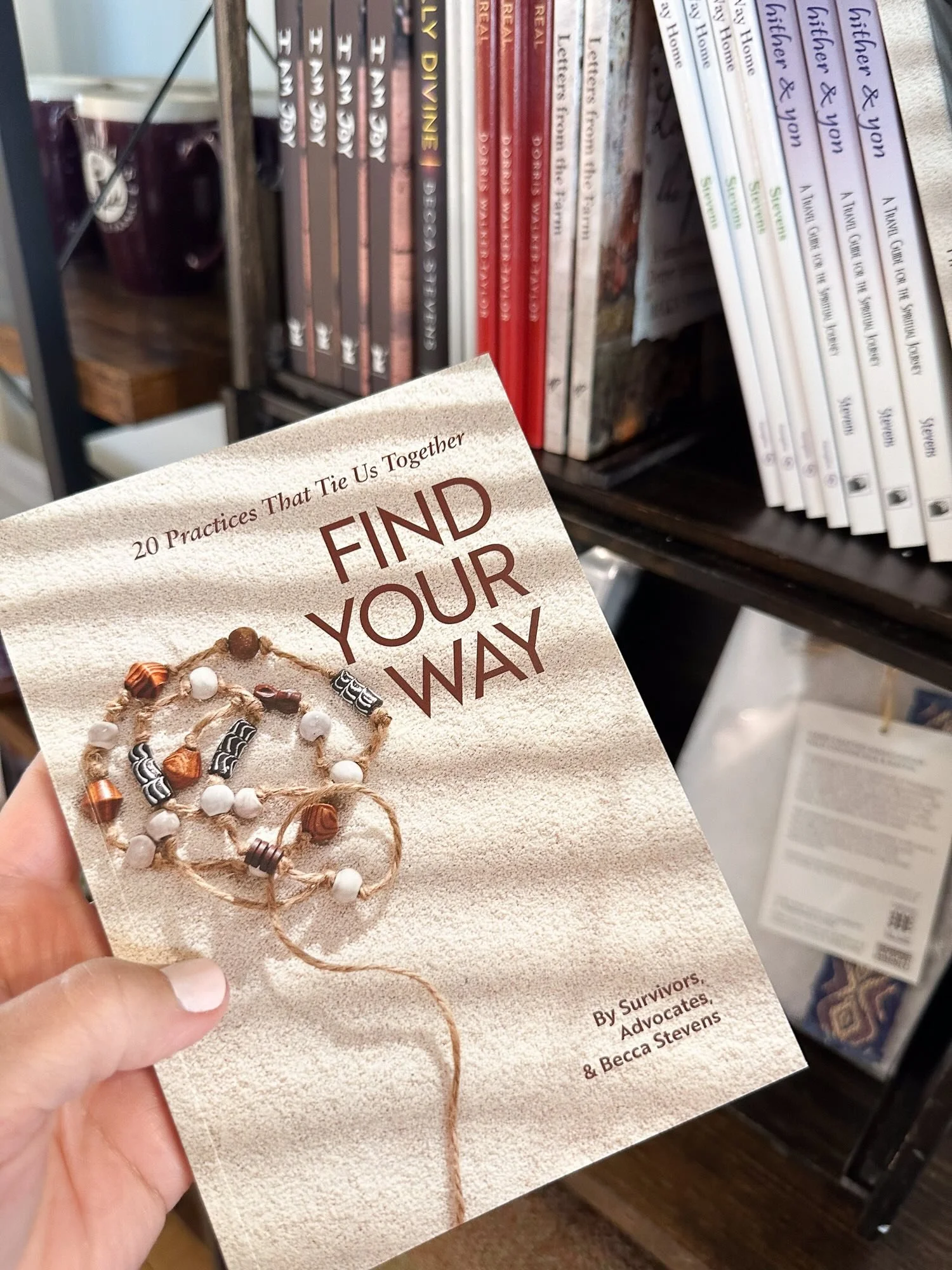
Continue Learning:
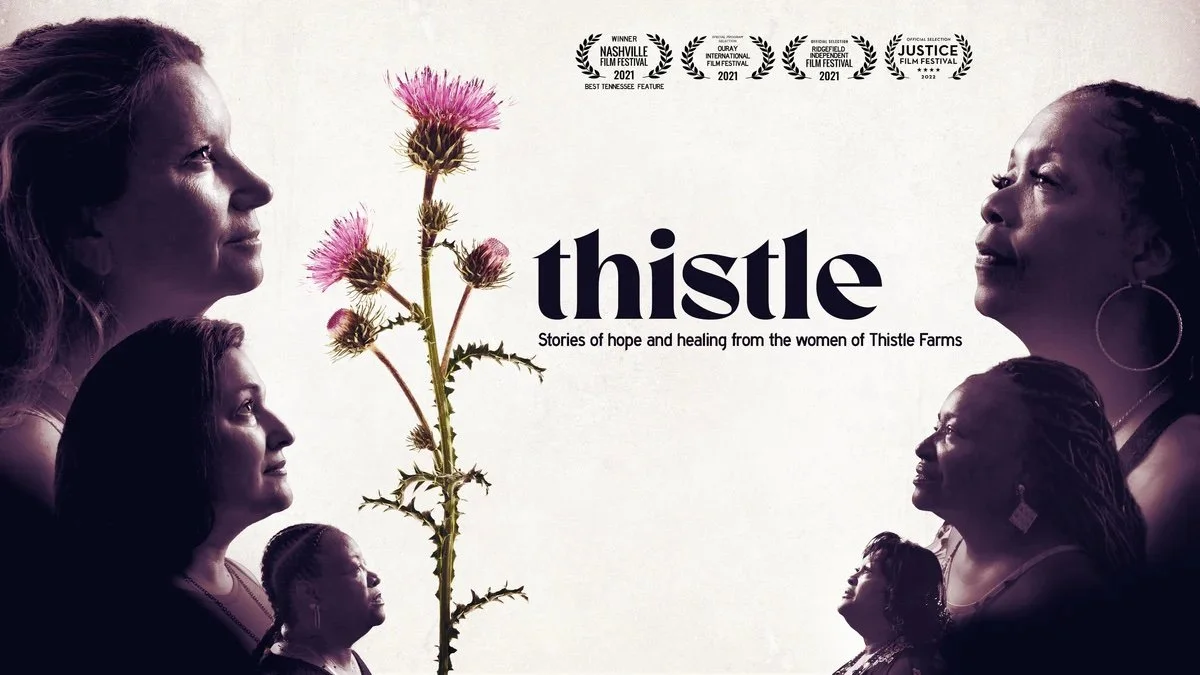
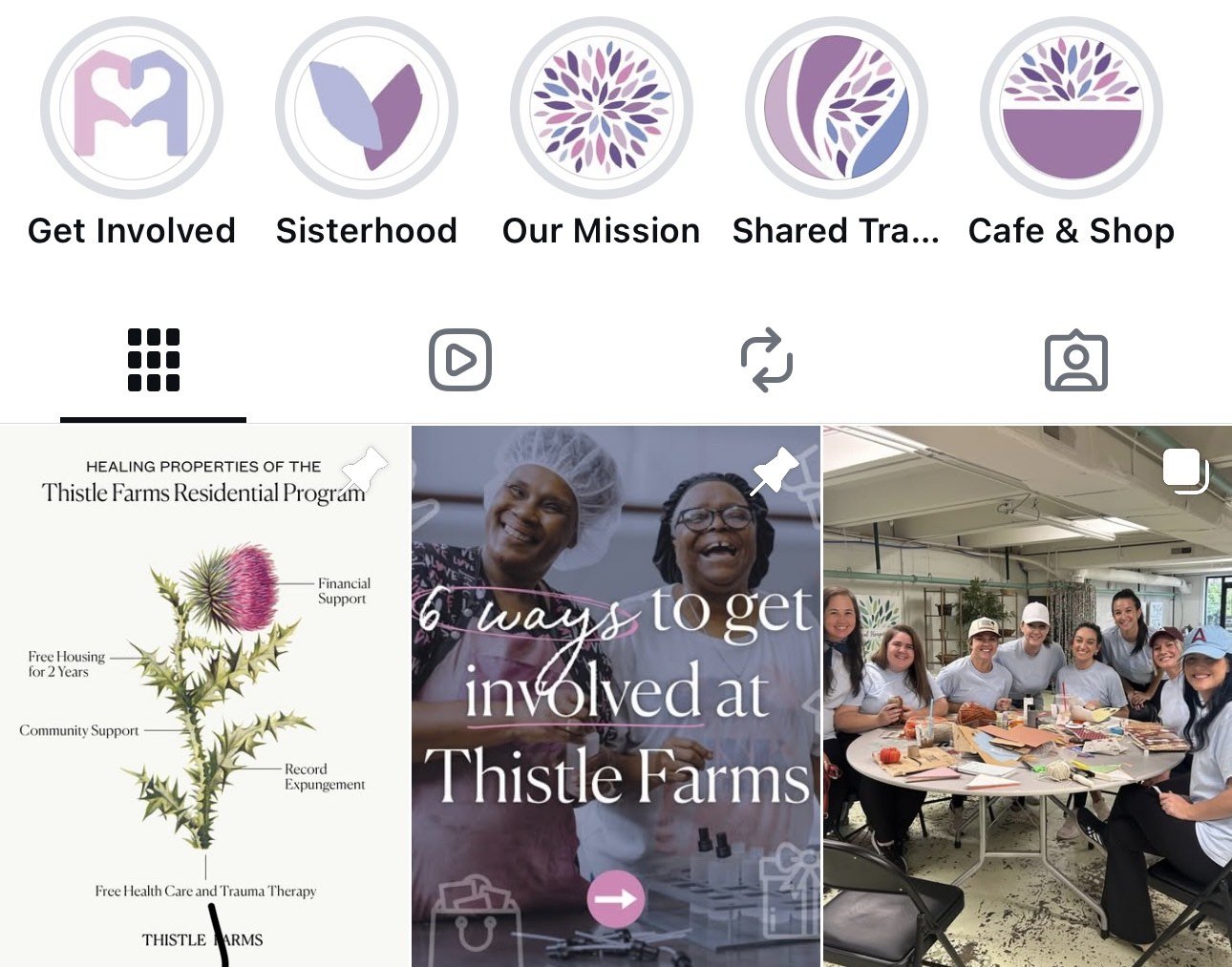
Books, Documentary, Socials
Trauma-Informed Storytelling
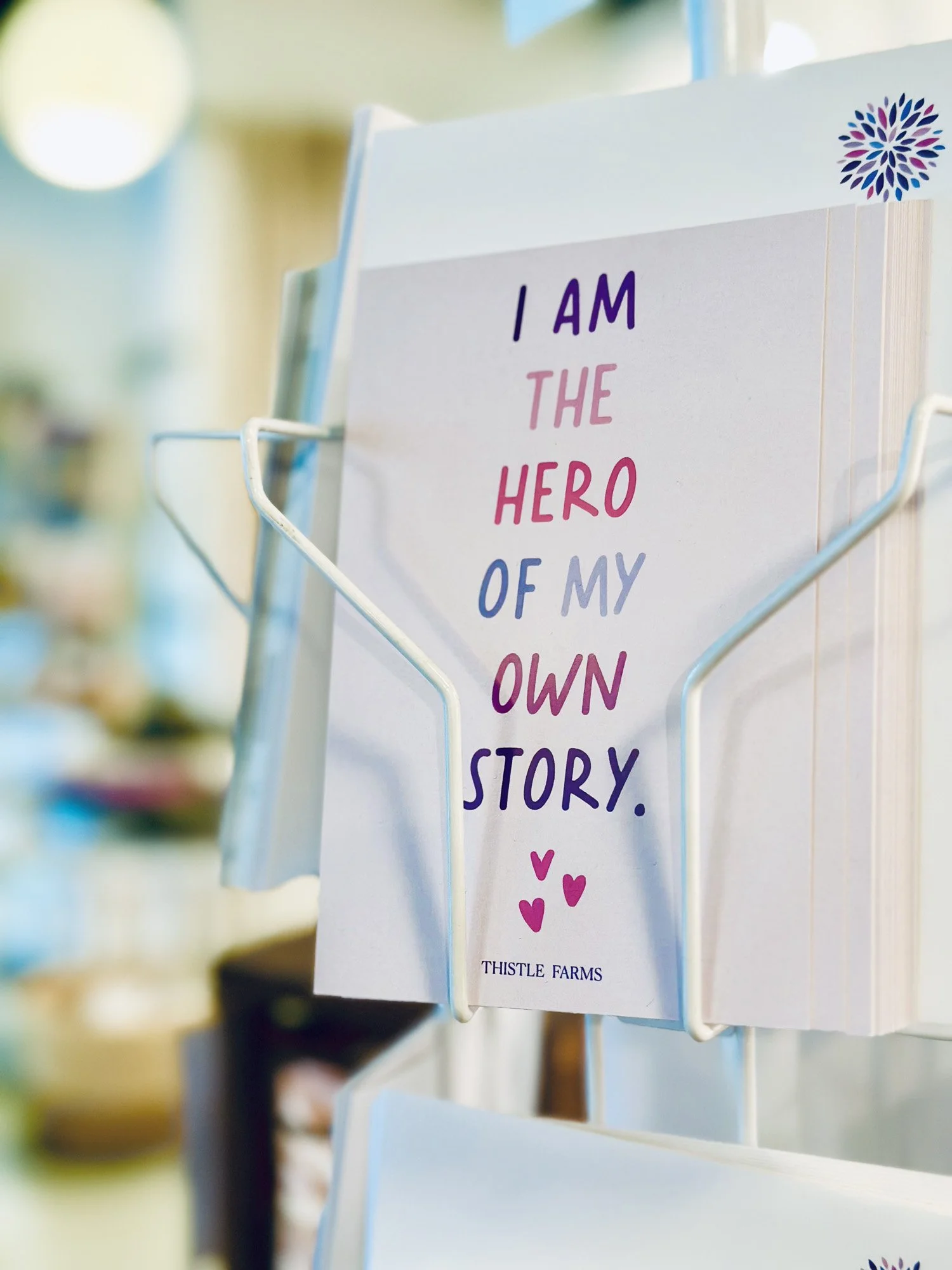
One of the most important aspects of the work Thistle Farms does is restore a sense of agency in women. Women are reminded that they are the heroes in their own stories. They are the ones doing the work. Thistle Farms is simply providing the time, space, and support for them to do so.
When—and if—a woman chooses to share her story publicly, Thistle Farms has a highly detailed, multi-step process for how she can consider and manage her choice. Operationally, this is a vital aspect of healing. A clear process ensures that well-meaning reporters, documentarians, researchers, or influencers do not re-traumatize a woman during the story-sharing process nor use her story in ways she hasn’t approved. Thistle Farms will be the first to share that the policies they have were learned the hard way. Their communications policies are just some of the examples of how healing informs every operational decision.
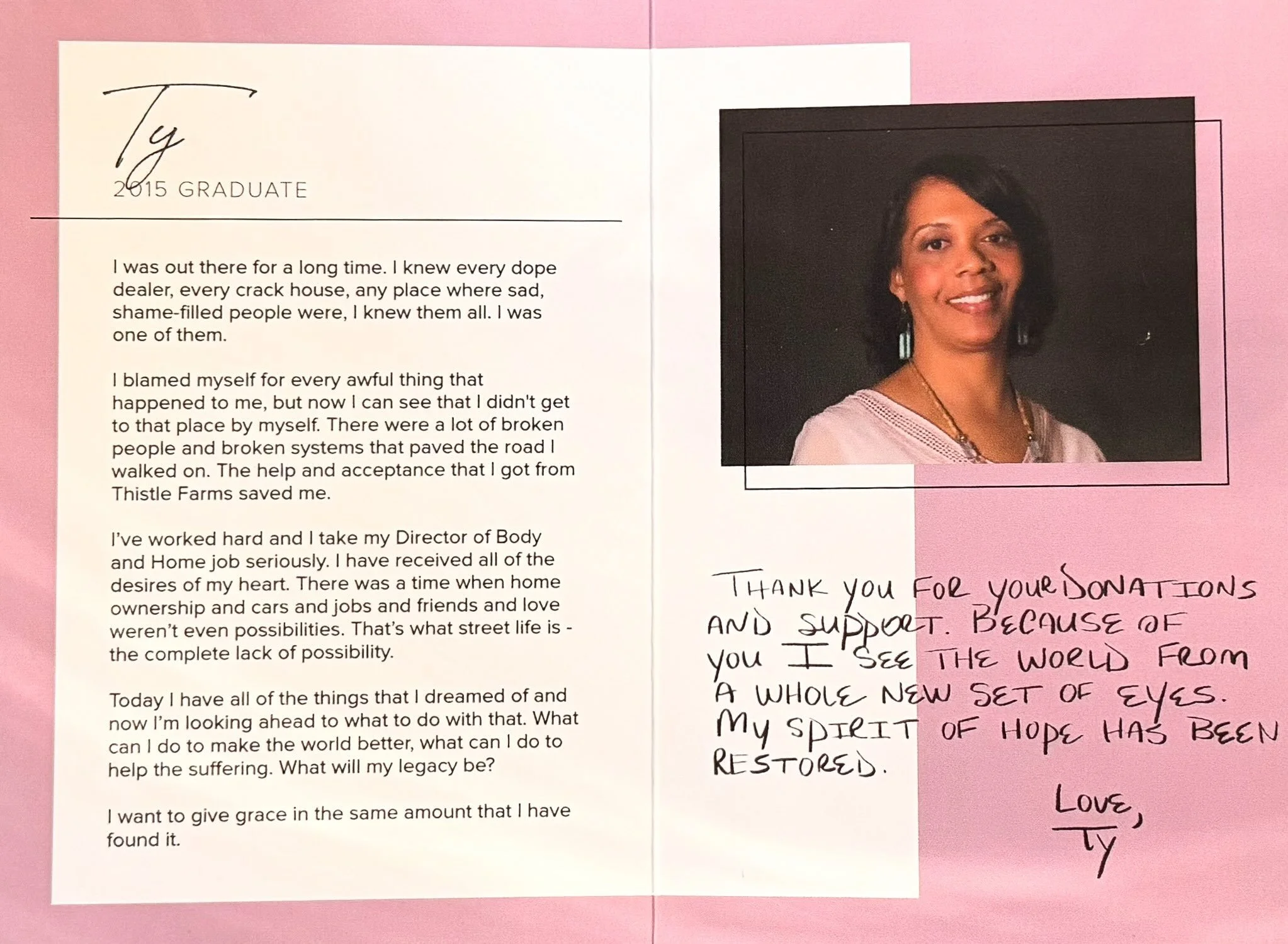
Photo of Thistle Farms material
“My life is the polar opposite of anything that I ever thought possible. Love saved my life.”
— Diana, 2023 Thistle Farms Graduate

Next Steps:
Speak Up. Advocate for Women.