
Women & Nonbinary Aquaculture Network
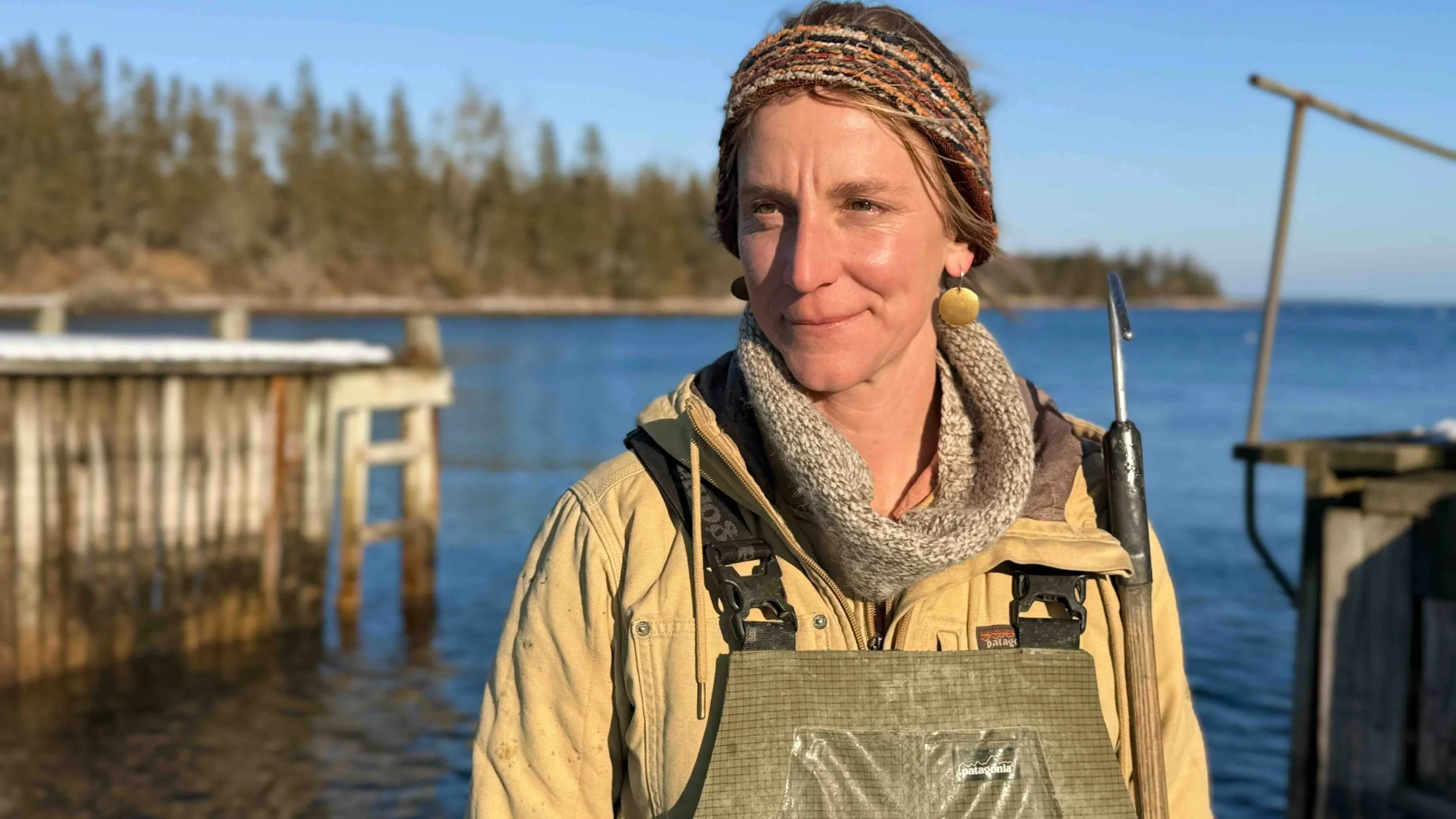
A peer network of women and nonbinary oyster, kelp, and shellfish farmers along the Maine coast, born from a research study on gendered barriers in the state's aquaculture industry, now growing into a collective voice in a historically male-dominated trade.
Location \ Sites Visited:
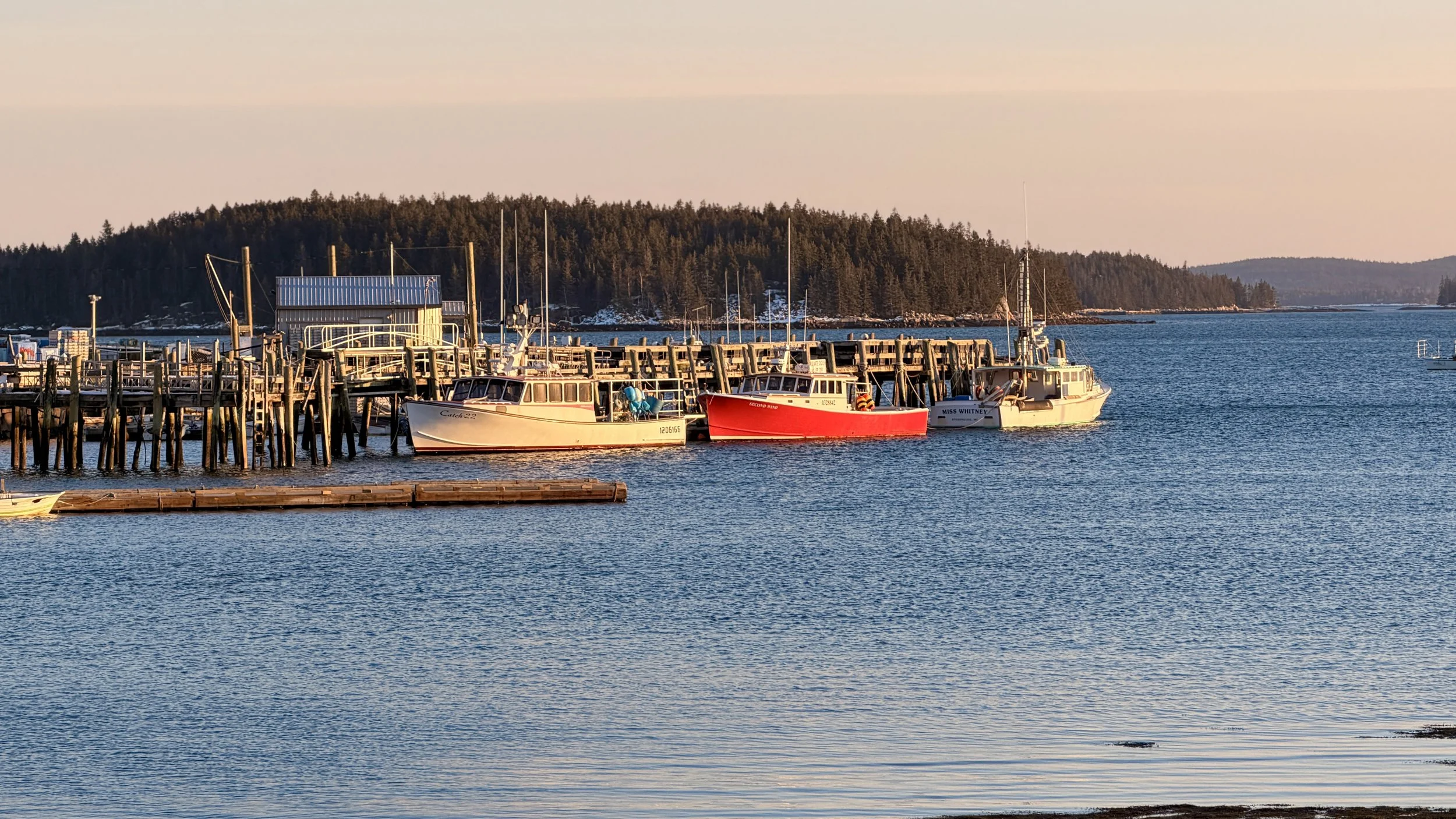
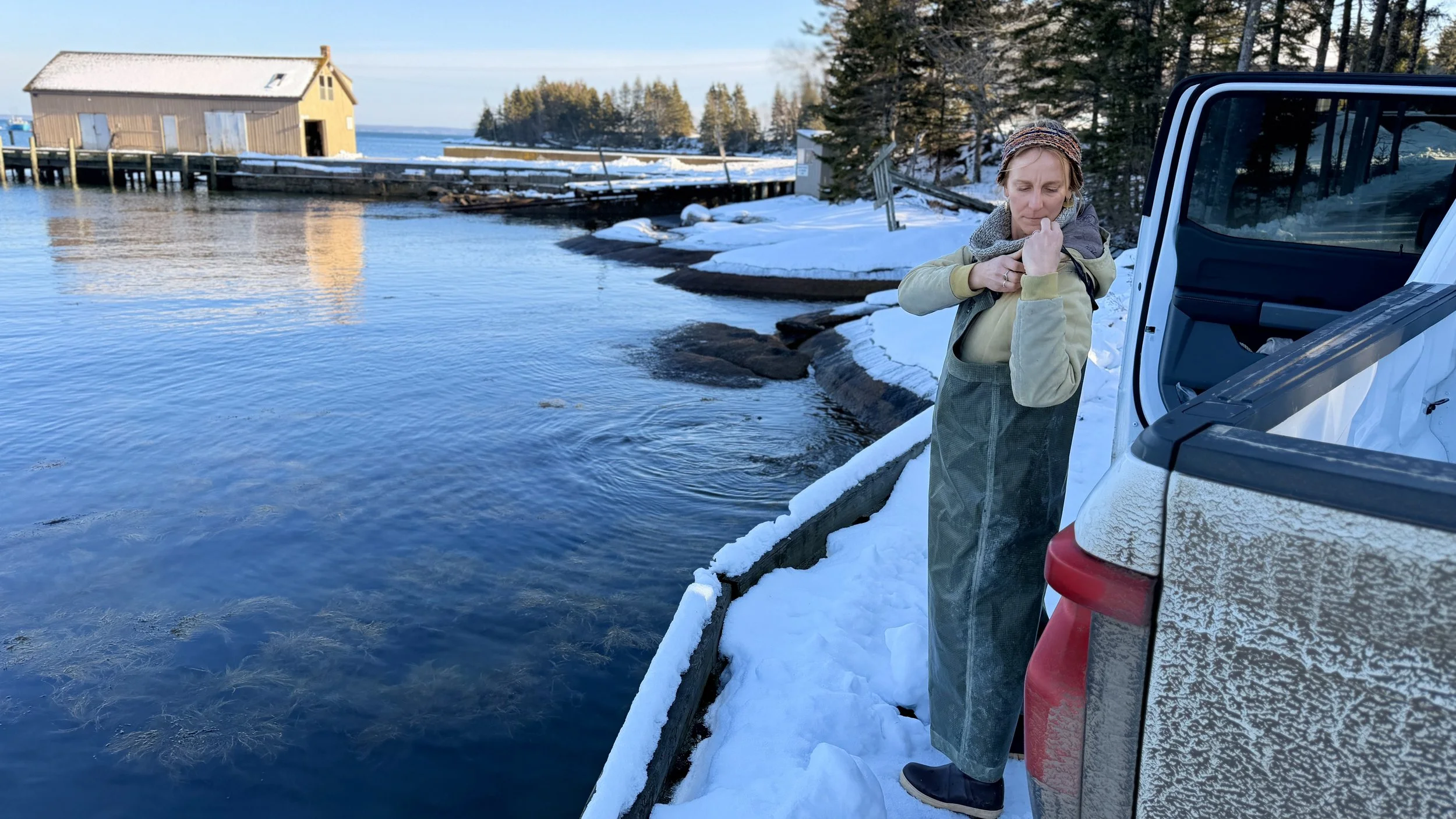
Deer Isle, ME | Deer Isle Oyster Workshop | Deer Isle Oyster Pound in Sunshine | Long Cove Sea Farm | Stonington, ME | Stonington Opera House | Strout’s Point Wharf, South Freeport, ME | Harraseeket River | Yarmouth, ME | Nauti Sisters Sea Farm | Cousins Island | Little Busters Oyster Farm | World Is Your Oyster , Wiscasset, ME | Robinhood Cove & Sasanoa River, Georgetown, ME | OystHERS Raw Bar & Bubbly, Bath, ME | Portsmouth, NH
Fieldwork Status:
Fieldwork Complete/ January 21-24, 2026 & August 24-28, 2026
System(s):
Trades & Workforce
Key Organizations / People:
Emily Whitmore, Associate Director, Maine Aquaculture Innovation Center | University of Maine, Jess Veo | Abigail Barrows, Deer Isle Oyster Company | Alicia Gaiero, Chelsea Gaiero, Molly Cronin, Emily Robinson, Nauti Sisters Sea Farm | Sadia Crosby, OystHERS | Caitlin Hopkins, Little Busters Oyster Farm | Nichole Potter, Potter Seakeeping | Nina Boutin, Luke Saindon, World Is Your Oyster | Heather Moretti, Portland, ME
Focus Areas:
Women & nonbinary entry into a male-dominated trade; collective action as a component of change; peer-network formation; emerging cooperative models; gear and equipment redesigned for women's bodies; licensing and capital access; technology lowering barriers to entry; policy impact
Fieldwork Approach:
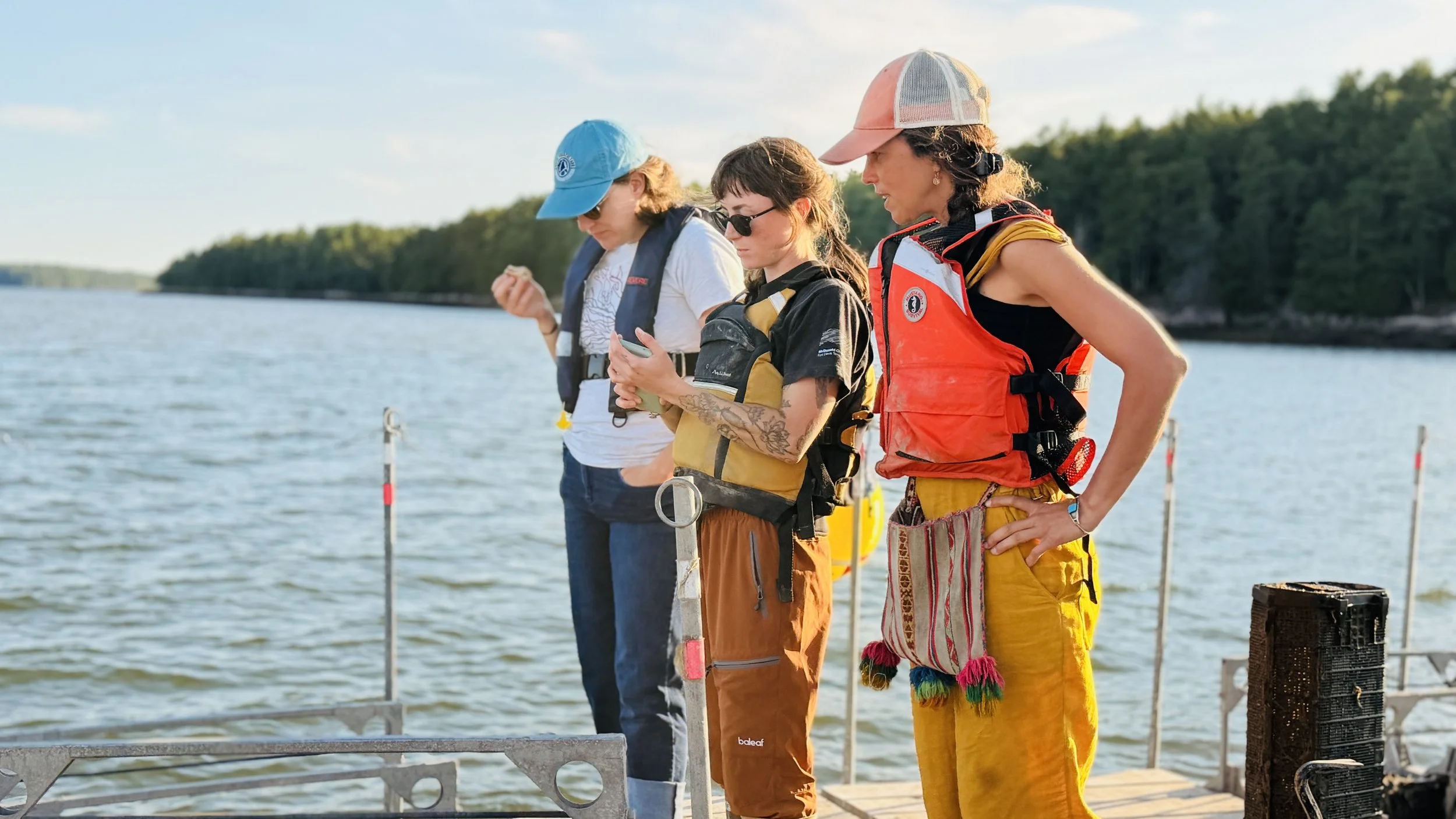
Formal interviews in homes, workshops, and aboard working farms; on-site observation of pre-harvest, harvesting, and boat operations; participant observation at a Network social/technology-demo gathering; guided community events (Island Women Speaks, Stonington Opera House); phone interview on network origins; cross-site contextualization across five farms and two research programs; photo and video documentation
Ethical Approach:
Fieldwork guided by a trauma-informed, care-based, non-extractive ethic emphasizing consent, collective structures, and community benefit
OVERVIEW
Maine's aquaculture industry has long been male-dominated. Women only hold approximately 23% of the state's aquaculture leases and licenses, and they are concentrated in shorter-term, less secure permits rather than the 20-year leases that let a farm compound in value over time.
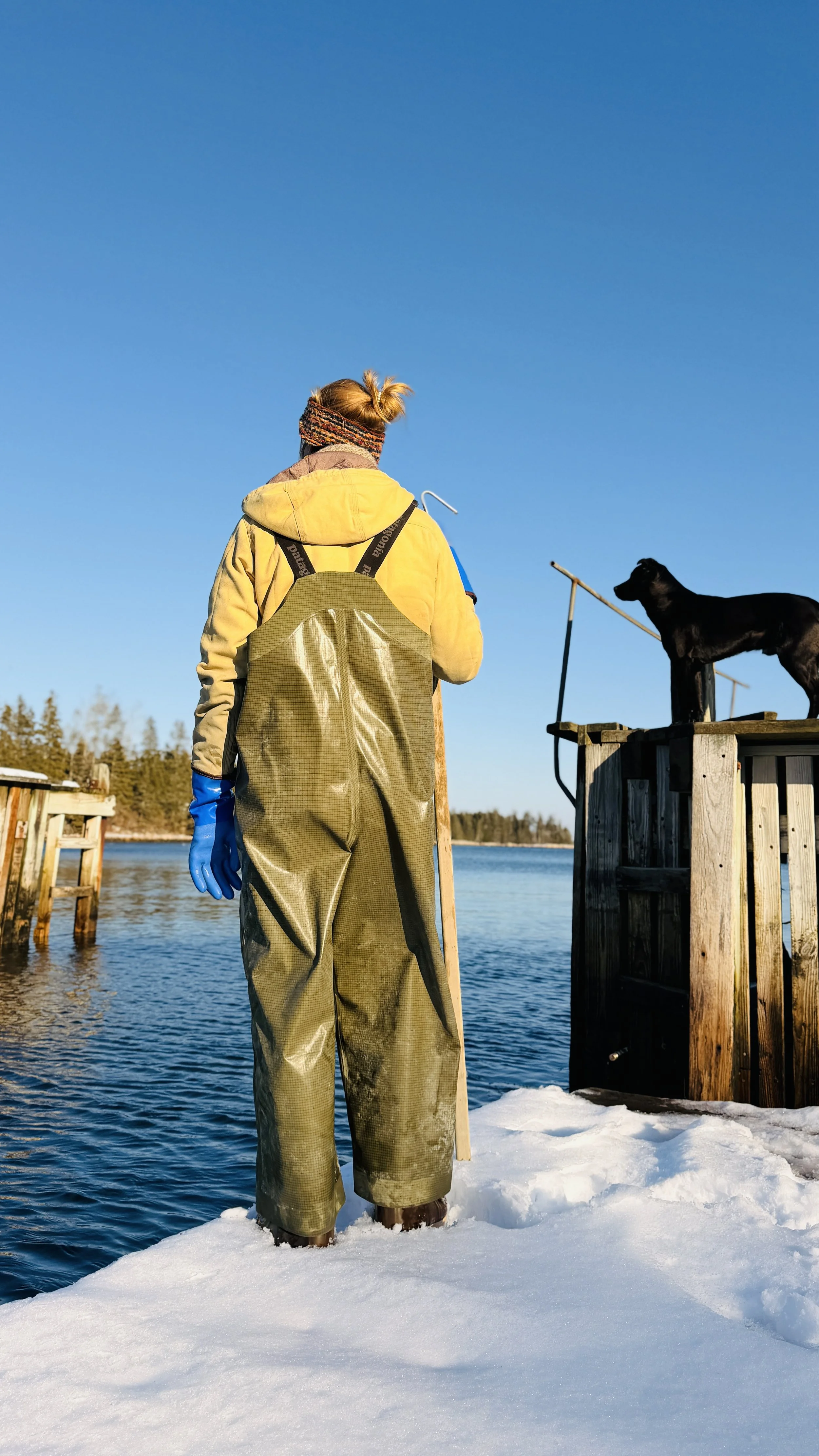
I spent nine days across two field visits: four days in Deer Isle and Stonington, ME, which included two full days with Abigail Barrows at Deer Isle Oyster Company in January, then five days in late August moving among oyster farms on Casco Bay, the mid-coast, and the Sheepscot and Sasanoa Rivers. Together they document how that gap is starting to close through a peer network.
The Network grew out of Shared Waters, a free University of Maine and Maine Sea Grant course that taught fishermen to diversify into oysters and other shellfish. The course was gender-blind by design, but attendance never grew among women. A follow-up study found why: women wanted maritime skills (knots, chart-reading, boat handling), not just the biology of oyster cultivation, and they wanted to learn and work among other women. That finding led to a training series in 2024, and then to the Women & Nonbinary Aquaculture Network, now organized through the Maine Aquaculture Innovation Center.
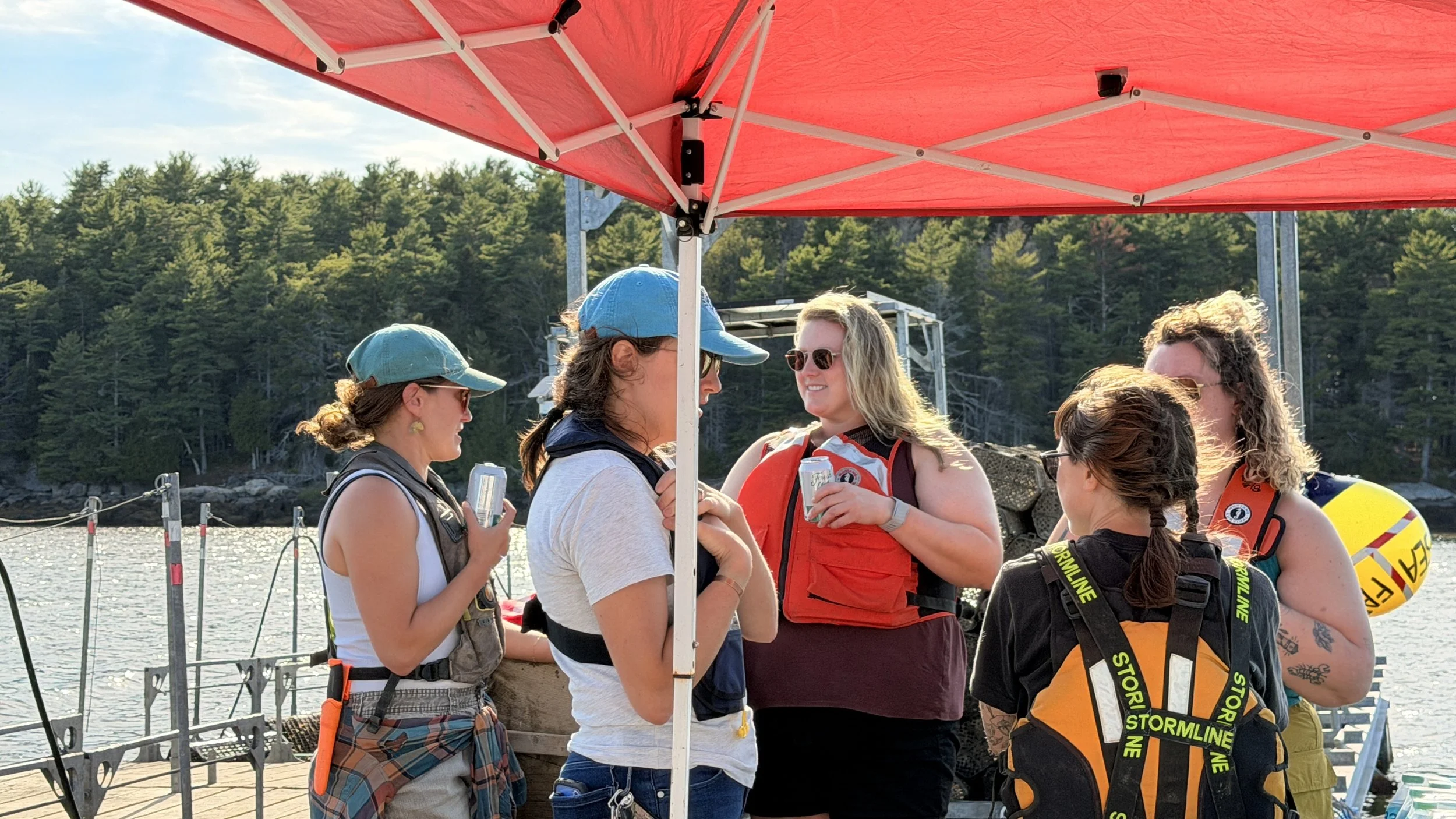
The Network is still informal by design, but it is visibly professionalizing. It’s offering members real support: shared job postings and gear, shucking labor for each other's events, maritime skill-sharing, and a growing sense that they can turn to one another for the practical and business help the industry hasn't otherwise offered them.
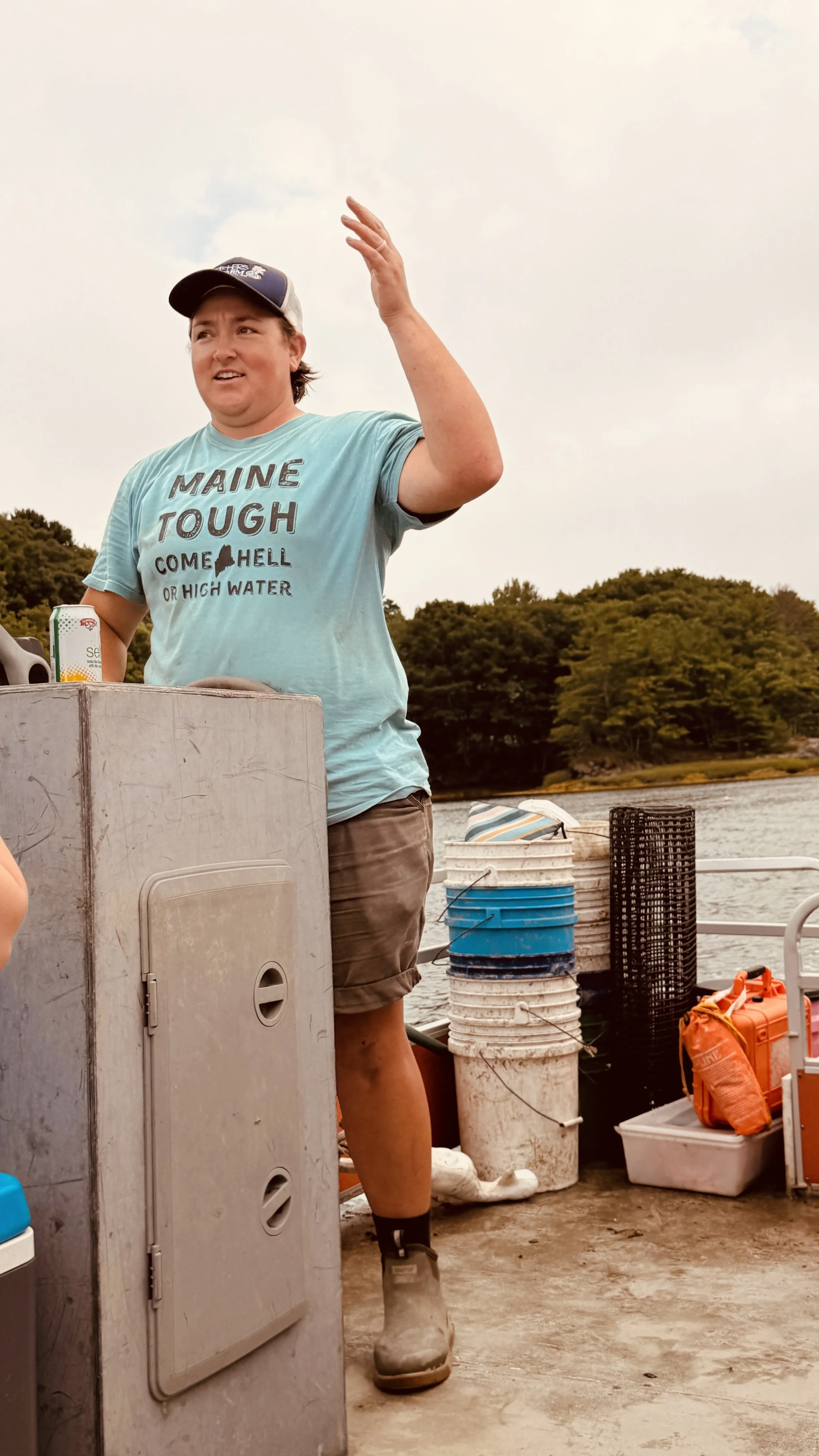
Two members are taking that support a step further. Caitlin Hopkins, an oyster farmer, and Nichole Potter, a kelp farmer, are in the early stages of forming a formal cooperative, aiming to share leases, equipment, and even caregiving support like meals and childcare, so Network members can rely on each other for the stability that farming alone doesn't provide.
Abby Barrows shows the same pattern reaching further still. Trained as a microplastics researcher, she built what has become the world's largest citizen-science dataset on ocean microplastics, using the same collective model: recruiting volunteers worldwide to help collect samples. She now runs an established oyster farm at Long Cove and is working toward the world's first plastic-free oyster and seaweed farm, work aimed at the broader ecosystem rather than her business alone. Because she is also a working farmer within the Network, she is well positioned to mentor other members directly, testing lower-cost, plastic-free materials that ease the path for farmers coming up behind her.
Caitlin, Nichole, and Abby are working at different scales, but the shape is the same: women gather, support each other, and then turn that support outward toward shared problems, from earning a stable living on the water to plastic in the ocean itself.
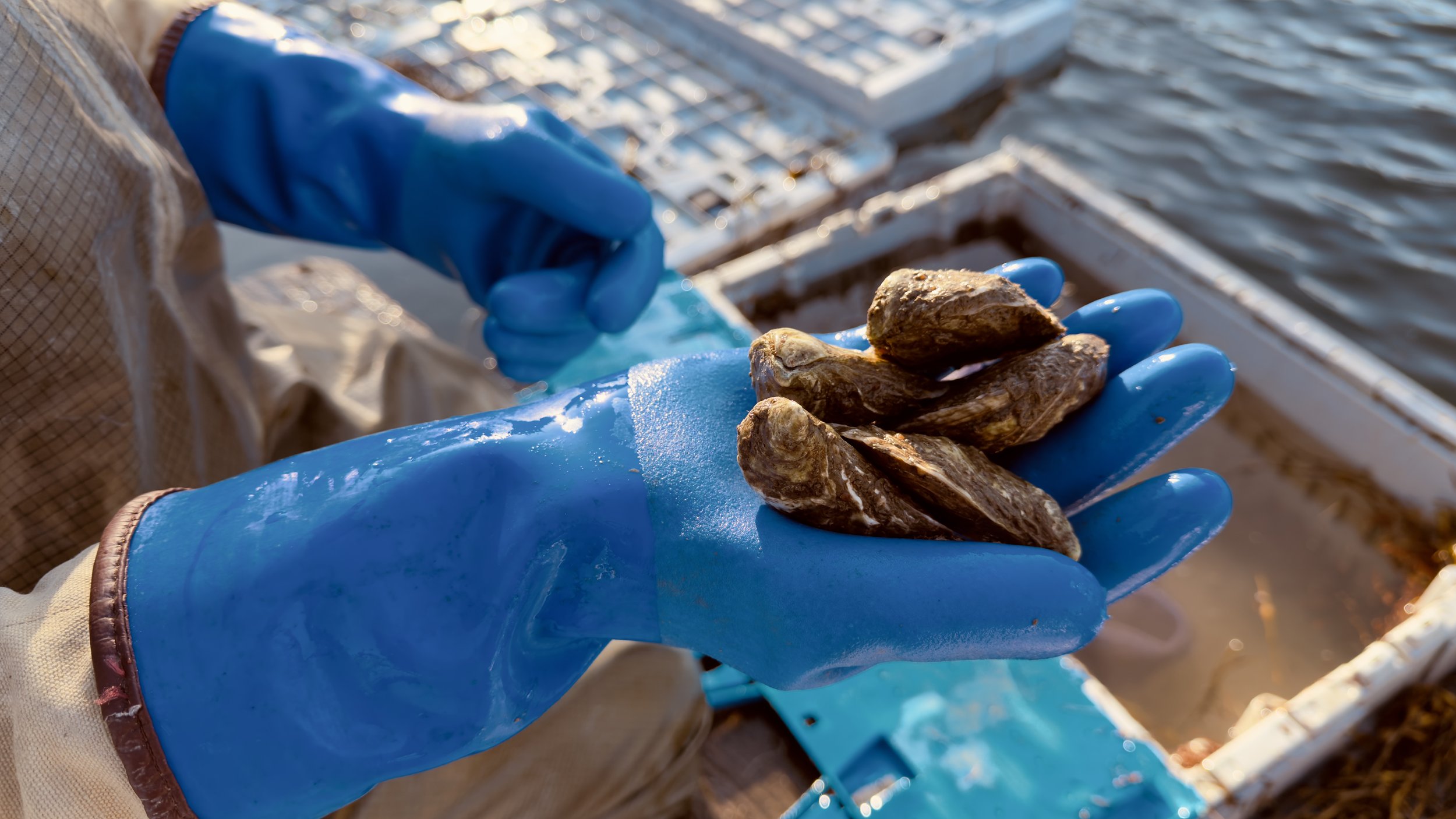
“The oyster doesn’t move. It adapts to the currents around it. It filters what’s harmful and makes the water a little clearer for everything else to live. It builds community—literally—by growing together to form reefs. To me, that’s what it means to live like an oyster; to stay rooted in community, to filter what’s toxic, and to make the way a little clearer for those who come after us.”
Abby Barrows, Tedx Talk: How to Live Like an Oyster
Key Insights:
Collective Action: The Network's formation followed a traceable chain: a gender-blind class produced flat enrollment among women, a qualitative study named the barriers behind it, and a training series built-in response became the seedbed for the peer network, formed by its own alumni. Inside the Network, collective action shows up as pooled information (job postings, gear, apprenticeship and accelerator programs), shared labor (shucking each other's events), and now, with Caitlin and Nichole, the early architecture of a formal cooperative designed around both business needs (shared leases, trucking, bulk sale) and caregiving needs (shared meals, laundry, on-site mental health support). Abby Barrows extends the same logic outward: her citizen-science model and her board seat at Haystack Mountain School of Crafts carry collective action into arts, environmental education, and ghost-gear recycling.
Scale: The Network scaled in stages, each one widening who it could reach. A single gender-blind class grew into a class built specifically for women, expanded into a full workshop and training series, and eventually formalized into the peer network itself; a subset of members are now in the early stages of building a formal cooperative. Not every member climbs every rung. Some attend one training and stay loosely connected; others turn out for Network-organized sessions on the technology and techniques that ease this work, from raising yield and reducing the physical toll of the labor to lowering the barrier to entry for newcomers and easing the social friction of expanding a lease on a shared waterway. Farming income alone still rarely supports a full livelihood, and most members hold a second job, so this staged growth lets the Network extend its reach without asking more of any one farmer can give.
Systemic Impact: The Network is generating qualitative data on a gendered experience in Maine aquaculture, in a sector with no systematic sex-disaggregated tracking of leases, licenses, or production. Members are already using that data to make the case for gear redesign, training curricula, and licensing support. It is preserving working waterfront access and creating a second income path for coastal communities as warming waters push lobstering further north. And it is starting to change the norms of the trade itself: women describing a shared refusal to accept being underpaid "because that's just the nature of farming," and a deliberate intention to build cooperative structures (shared risk, shared care, shared brand) before the industry around them fully sets its terms.
Next Steps:
Educate Yourself. Educate Your Community.