
Thistle Farms

Trigger warning: The following contains content relative to sexual trauma and abuse.
Location / Sites Visited:
Nashville, TN, USA
Thistle Farms Education Center | Thistle Farms Cafe | Thistle Farms Store | Thistle Farms Safe House | Thistle Farms Residential Building | Thistle Farms Bath & Body Warehouse and Job Training Center

Research Status:
Research complete/ October 19-22, 2025

System(s):
Labor, Trades & Environmental Resilience

Key Organizations / People:
Thistle Farms

Focus Areas:
Care as economy, healing as a foundation for economic independence, social enterprises, job training program, National Network, Global Shared Trade Network

Methodological Approach:

Multi-site ethnographic fieldwork; participant observation; semi-structured interviews and informal conversations; comparative, example-based analysis; systems and network analysis; policy-oriented documentation; visual and audio documentation

Ethical Approach:
Research is guided by a trauma-informed, care-based, non-extractive ethic emphasizing consent, collective structures, and community benefit
OVERVIEW:

Founded in 1997 by Becca Stevens, Thistle Farms grew from a small, free residential program into a nationally recognized organization combining recovery programming, job training, social enterprise, and advocacy. Over nearly 30 years, Thistle Farms has scaled up consistently. It has evolved from an individual taking action to help women who had survived prostitution, trafficking, addiction, and homelessness, to a 501c3 social-enterprise with local, state, national, and global impact. 

After preparatory research, I spent four days on site. Two were as a participant in an Educational Workshop offering, which was designed as an intensive learning experience about the mission, vision, programming, and operational function of the organization. It included tours of all physical sites and social enterprises, as well as time with their Founder and key department heads. 

NOTE: I did not request to take photos nor film current program participants or survivors. Thistle Farms has stories captured internally using a trauma-informed process they have honed over years to ensure survivors are not exploited nor re-traumatized during storytelling—and have ongoing opportunities to renew consent for use. Their approach to storytelling and my approach to research aligned in this way, so all film and images taken are of the cohort of women I attended the session with or approved-use photos from their website. 

Pre/Post-Visit Research:

  • -Thistle Farms website

    -Annual Reports, 2023-2024, ​​2022-2023, 2021-2022, 2020-2021, 2019-2020
    -Audited Financial Statements, 2023-2024, 2022-2023, 2021-2022, 2020-2021
    -IRS 990 Filings, 2022-2023, 2021-2022, 2020-2021
    -Charity Navigator
    -Guide Star

  • -Find Your Way, Survivors, Advocates, & Becca Steven, 2020
    -The Way of Tea and Justice, Becca Stevens, 2014
    -Snake Oil, Becca Stevens, 2013

  • -Thistle: Stories of Hope & Healing from the Women of Thistle Farms, Full-length Documentary by Northman Creative, 2022
    -The Way of Tea and Justice by Becca Stevens, VC’s Shelf, October 23, 2025
    -Becca Stevens, Founder of Thistle Farms on How to Make the Greatest Impact, Build a Winning Team with Tim Schurrer, April 22, 2022
    -Becca Stevens–Practically Divine, Dream Big Podcast with Bob Goff and Friends, January 5, 2022
    -Becca Stevens of Thistle Farms: An Enterprise for Women Built on Love, For The Love with Jen Hatmaker, March 13, 2018

Field Notes:

    • Location: Thistle Farms Neighborhood, West Nashville

    • Participants: 0

    • Focus: Community context, neighborhood accessibility

    • Key Observations:

      • Walked the neighborhood to understand socio-economic positioning. Thistle Farms is located on the cusp of what appears to be a higher-need section of the city and the gateway to Vanderbilt University and more resourced districts.

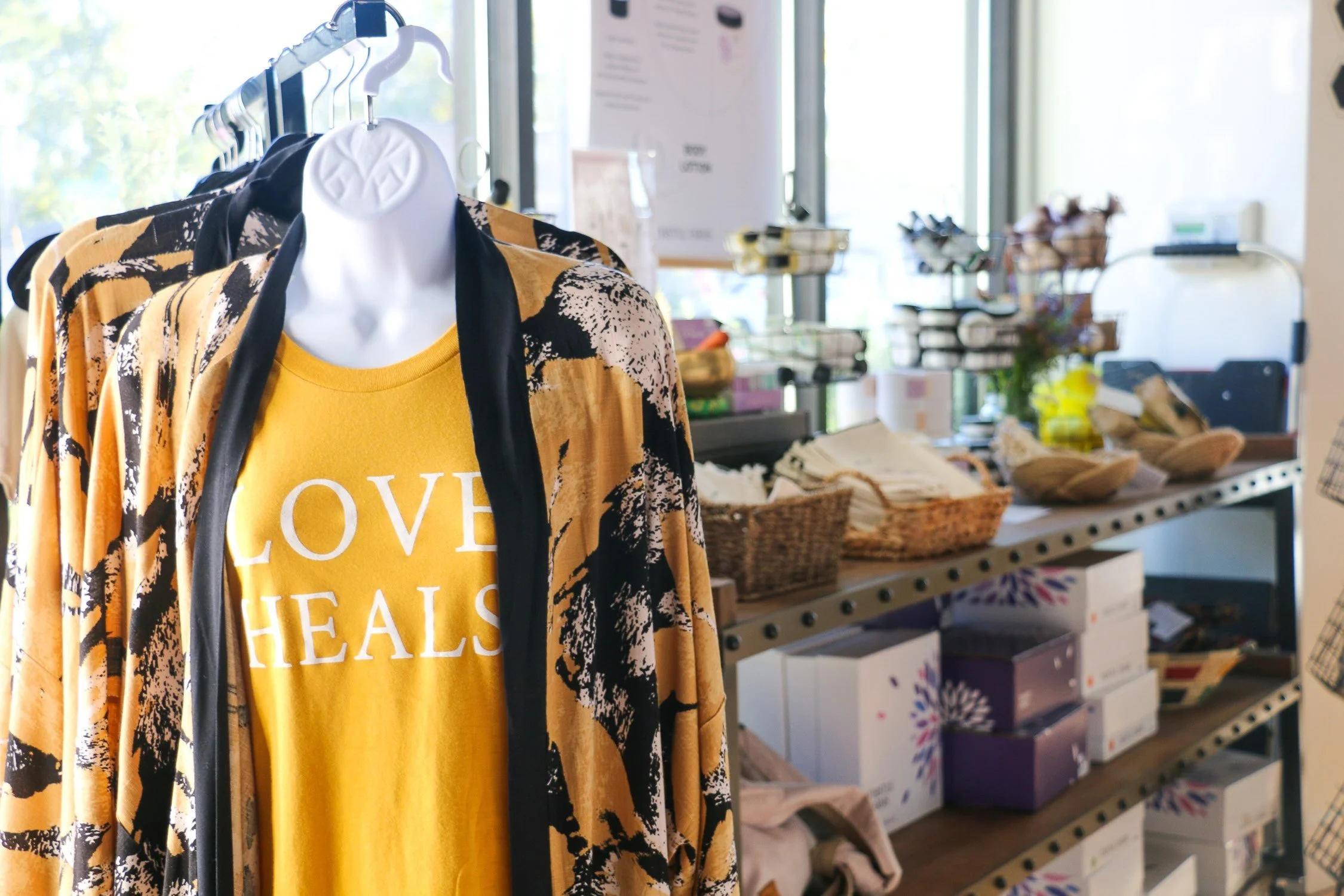
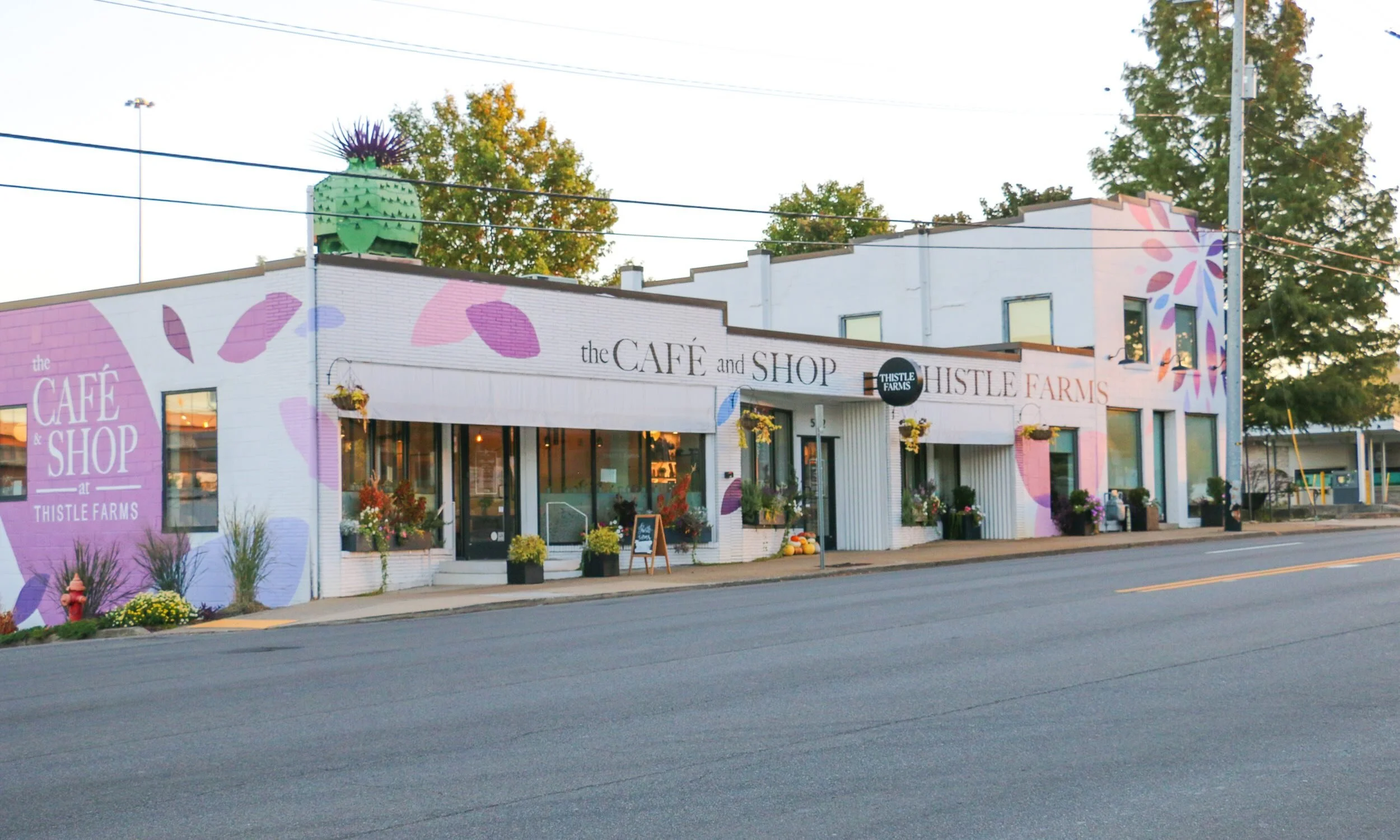
      • Outside of building is inviting with murals, quotations, plants, and flowers.

    • Reflection: Well-maintained physical structure adds warmth and beauty to neighborhood. Feels inviting.

    • Location: Nashville, TN, USA, Thistle Farms Education Center, Thistle Farms Cafe, Thistle Farms Store, Thistle Farms Safe House, Thistle Farms Residential Building

    • Participants: Cohort of other guests from WA, UT, ID, TX, LA, OK, IN, OH, AL, MS, NJ, NY, and NH; Thistle Farms Staff Members as presenters: Becca Stevens, Founder; Sheila Simpkins-McClain, Director of Residential Services; Kim Stevens, National Network Specialist; Holli Anglin, Director of Job Readiness & Advancement; Thistle Farms Staff Members and two-year residential program participants as observed 

    • Focus: Overviews of Mission of Thistle Farms, History & Evolution, Two-Year Residential Program, and Safe House

    • Key Observations:

      • Well-established organization with community support

      • Residential program is recognized as a unique and effective model in the U.S. and inspired National Network of supportive services for women

      • Care and healing centered in all decision making about programming and services

      • Significant volunteer support has helped with organizational evolution, justice-enterprise expansion, and scaling of networks

      • Social enterprises came from need to provide employment

      • Effective advocacy by women on behalf of women secured support from community partners to provide necessary wrap-around and targeted health-service delivery for residential program participants

    • Quotations:

      • “We are a mission with a business, not a business with a mission”

      • “We are building a movement for Women’s Freedom”

      • “Love Heals”

      • All from Founder, Becca Stevens

    • Reflection:

      • Healing is necessary for women to begin a path to economic independence

      • Weekly Circle and other formal and informal Sisterhood activities support both recovery of graduates and retention of staff

      • Community buy in led to volunteer engagement, which led to fundraising and ability to gain traction to fund purchase of commercial properties

      • Women are credited with growth of organization

      • Reminded often they have agency and are the heroes of their own story

      • Credit for organizational evolution and expansion is assigned to the women as a collective, even with strong ties to it founder, who is still effectively engaged

      • Strong example of how collective action supports scaling of organizational infrastructure and creation of social enterprise

    • Location: Nashville, TN, USA, Thistle Farms Education Center, Thistle Farms Cafe, Thistle Farms Store, Thistle Farms Bath & Body Warehouse and Job Training Center

    • Participants: Cohort of other guests from WA, UT, ID, TX, LA, OK, IN, OH, AL, MS, NJ, NY, and NH. Thistle Farms Staff Members as presenters: Tasha Kennard, CEO; Courtney Sobieralski, Director of People & Culture overview; Miranda Harris, Director of Shared Trade and Global Network; Amanda Clelland, Director of Communications & Advocacy; Kim Stevens, National Network Specialist; Sheila Simpkins-McClain, Director of Residential Services; Thistle Farms Staff Members and two-year residential program participants as observed 

    • Focus: Leadership; People and Culture Policies and Practices; Advocacy and Policy; Social Enterprises; Warehouse Tour; Global Shared Trade Network

    • Key Observations:

      • Thistle Farms is driving legislation and awareness of trafficking, prostitution, and overall exploitation of women

      • Reinforcement that to protect women, society must protect children

      • Started as a local effort and expanded to support women nationally and globally

      • Their legislative efforts so far are statewide, but they serve as models for national work

      • Their Global Shared Trade Network expands the Fair Trade model to ensure women are benefiting more economically by shortening the value chain from producer to consumer

      • They are supporting the path to economic freedom for more than 1400 women throughout 39 Shared-Trade Global partnerships

      • They are re-shaping how social service agencies manage people and culture and their model of care is serving as the model for more than 64 organizations and 44 developing organizations nationwide. 

    • Quotations:

      • “Not all money is good money” 

      • “Put money into programs not buildings”

      • First from Becca Stevens; Second passed down from her late mother’s wisdom

    • Reflection:

      • Encourages an economy built on care and collaboration.

        • Invested significant time into a process for comms and PR grounded in trauma-informed policy and practice

        • Shortening the value chain so more women can benefit more significantly from Global Shared Trade Model is important

        • People and Culture practices, and internal culture, have evolved to support recovery. This has led to higher rates of recovery success and higher rates of employee retention

        • Measure success by how effectively their social enterprises support their mission

        • Many policies co-created

        • Founder has earned trust in the community and been recognized nationally as a White House Champion of Change, Hometown Hero, among others

    • Location: Nashville, TN, USA, Thistle Farms Cafe, Thistle Farms Store

    • Participants: Thistle Farms Staff Members and two-year residential program participants as observed

    • Focus: Observation and Photography

    • Key Observations:

      • Women were working well together in the cafe

      • One woman apologized for the extra load her colleague needed to absorb as she took PTO; her colleague told her that while taking PTO may have had a brief impact on others, it is still important and necessary and that the team covers for each other as time is taken. Exemplified culture of rest as a recovery practice and a strategic objective of People and Culture to manage a team where the majority of its members are in recovery

      • One woman in the program proactively told me about her life and how she came into the program. She said others hasn’t worked for her and she had given up hope. She said she was surprised by all the beauty in the home and by the smells of all the body products she was given when she arrived. She was also surprised by the trust given to her and the freedom allowed when handed a key to the home

      • A woman working in the shop, who did not come through the program, told me about her path to healing and how the Thistle Farms Sisterhood culture and the internal wellness programs helped her heal physically, mentally, and spiritually. She is able to manage steady work and is building savings for the first time

      • Another woman in the shop, who appeared to be a manager, was navigating a stressful phone call, which then led to her talking about how she learned coping strategies through the program and that the internal culture helps her as she learns to manage stress through recovery

    • Quotations:

      • “They loved me back to life”

      • Woman in the program

    • Reflection:

      • Cafe and Shop connect local women to women nationally and globally

      • Helps women in other countries access the global economy from their artisan enterprises

      • Individual women are going through the program, accessing job training, growing in their careers, and becoming mentors

      • Success of recovery program coupled with slow, progressive job training is enabling women to be reunited with their children and stabilizing families

      • Many women graduate from the program and earn licensure for professional work and have savings to begin an independent life. One of many examples of Social Return on Investment of care

Key Findings:

  • Collective Action: Early organizing work was through a Mayoral Task Force. Volunteer organizing launched initial programming. Community partnerships provide most wrap-around support and certain therapeutic needs. Current residential-program use of shared authority creates a communal living environment that helps sustain a Sisterhood for Life culture of social support. Weekly Circle meetings are open to all and help provide a community for women to stay connected to. Individuals engaged with Thistle Farms, whether graduate, staff, or volunteer, voluntarily take on the identity of a Thistle Farmer, sharing a collective identity and purpose.

  • Scale: Multi-level, collective action is what enables Thistle Farms to scale efforts from individual to collective, local to global, informal to formal, while still maintaining mission-driven practices and its intended societal impact. Thistle Farms’ residential model of care is the driving factor in the expansion of its National Network, which is increasing residential support options for women throughout the United States. Social enterprises, formed as Justice Enterprises, and Global Shared Trade programs connect women to local, national, and global markets, while integrating care and workforce development. Thistle Farms procures the all-natural ingredients for their body products and teas from local sources, but also from women-led artisan enterprises worldwide. Not all are 100% women run, but Thistle Farm women are driving the market demand for products connected to healing both the producer and the customer. Their lens, specifically through their study of the violent history of tea production, strives to help reclaim tea as a source of healing for women rather than as a source of harm.

  • Systemic Impact: *Women’s economic independence depends on multiple systems functioning together, aligned with the needs and experiences of the women within them. Thistle Farms is positively impacting the following systems: Economic & Market | Labor & Workforce | Care & Social Reproduction | Governance & Policy | Environmental & Ecological | Knowledge & Expertise | Infrastructure | Cultural & Narrative

    • Their Global Shared Trade Network is redesigning value chains, shortening them, and prioritizing dignity and living wages.

    • Communities benefit from a Social Return on Investment (SROI). For example, allowing a woman convicted of a non-violent crime to enter a Thistle Farms residential program rather than being sent to prison is not only less expensive for tax payers, women are recovering, getting job training and work experience, then entering the local workforce. They then contribute to the economic growth of the community and reduce the need for social-service support.

    • The success rates of their model of care and workforce practices demonstrate how care is connected to economic infrastructure. Specifically, their trauma-informed operational and communication practices, internal wellness policies, and unique PTO benefits support sustained recovery for program graduates and retention of staff.

    • Families are being repaired as women heal from trauma.

    • Women are organizing around advocacy and influencing policy agendas at different scales.

Bonus Operational Content for Organizations
Previous
Previous

Women in Aquaculture: Maryland